George Rogers Clark National Historical Park

Trailie
Build your George Rogers Clark National Historical Park itinerary
Tell Trailie your dates, pace, and interests — get a day-by-day George Rogers Clark National Historical Park plan with hikes, drives, and must-see stops.
George Rogers Clark at a glance
- Best time
- March–May, October–November
- Trip length
- 1–2 days
- Don't miss
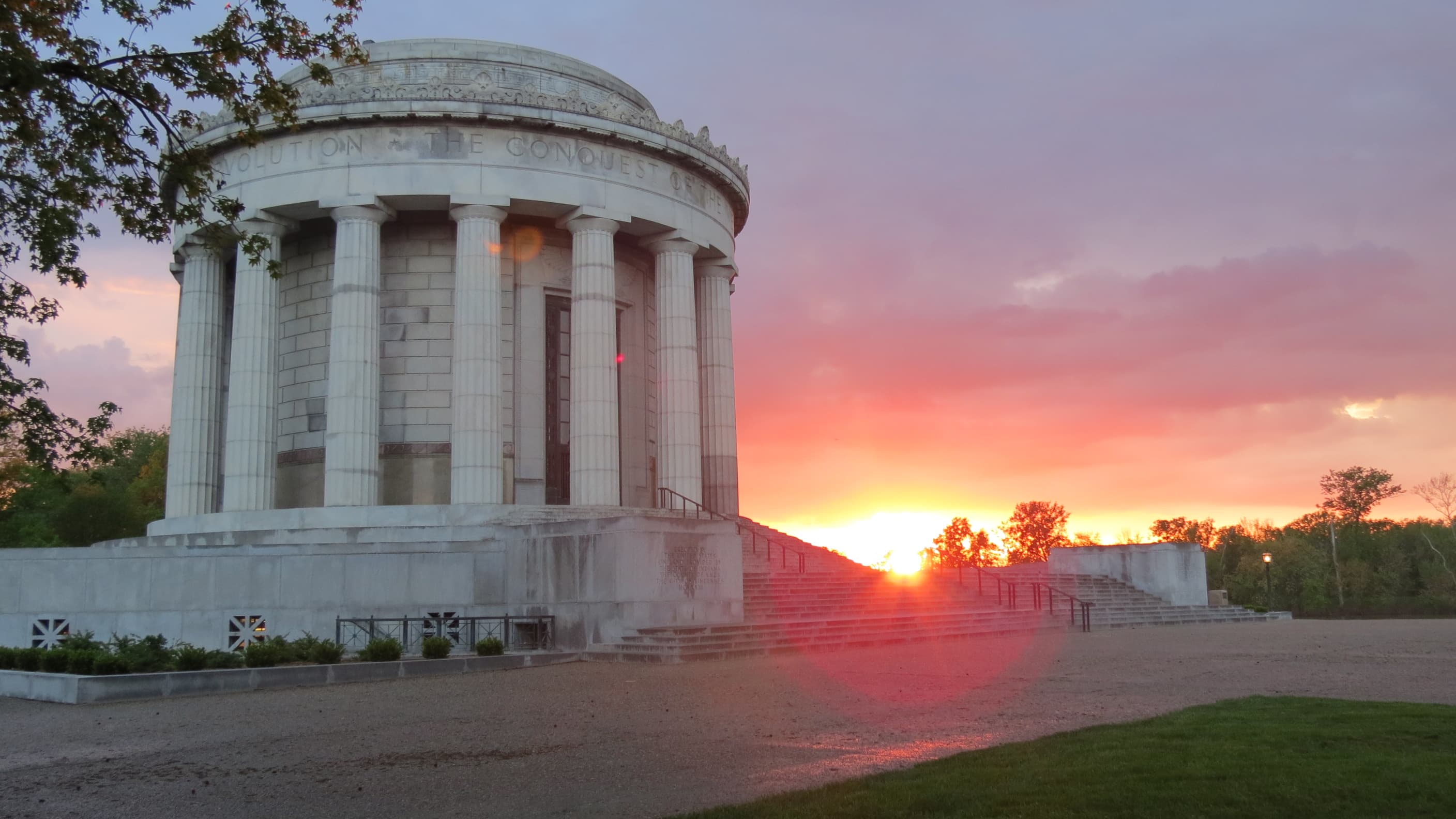
- Visit the Clark Memorial
- Nearby city
- Vincennes, IN
Explore this park
About George Rogers Clark National Historical Park
The British flag would not be raised above Fort Sackville Feb. 25, 1779. At 10 A.M., the garrison surrendered to American Colonel George Rogers Clark. His American army, aided by French residents of the Illinois country, had marched through freezing floodwaters to gain this victory. The fort’s capture assured United States claims to the frontier, an area nearly as large as the original 13 states.
Weather Information
The weather in the area is quite typical for the Midwest. The average temperature for the winter months is in the mid 30s, but the summers can often be hot and humid with temperatures reaching into the 90s.
Operating Hours
Visitor Center
The George Rogers Clark National Historical Park Visitor Center is a great place to start your visit. The visitor center contains a small exhibit area, bookstore, and restrooms. The 30-minute introductory movie called "Long Knives" shares the backstory of George Rogers Clark and his campaign during the American Revolution. Before going to the Clark Memorial, check-in with a ranger at the visitor center.
- Monday9:00AM - 5:00PM
- Tuesday9:00AM - 5:00PM
- Wednesday9:00AM - 5:00PM
- Thursday9:00AM - 5:00PM
- Friday9:00AM - 5:00PM
- Saturday9:00AM - 5:00PM
- Sunday9:00AM - 5:00PM
Memorial Building
The memorial is opened on request. Please check with rangers at the visitor center to ensure that the memorial is open before ascending the 33 steps to the door. The memorial building was designed by architect Frederic C. Hirons and constructed by the WR Heath company between 1931 and 1933. Inside the memorial are seven (7) murals by artist Ezra Winter, a bas-relief by Joseph Kiselewski, and a statue of George Rogers Clark by Hermon Atkins MacNeil.
- Monday9:00AM - 4:45PM
- Tuesday9:00AM - 4:45PM
- Wednesday9:00AM - 4:45PM
- Thursday9:00AM - 4:45PM
- Friday9:00AM - 4:45PM
- Saturday9:00AM - 4:45PM
- Sunday9:00AM - 4:45PM
Parking Area
The Visitor Center parking area off of Second Street at Nicholas Street
- Monday9:00AM - 5:00PM
- Tuesday9:00AM - 5:00PM
- Wednesday9:00AM - 5:00PM
- Thursday9:00AM - 5:00PM
- Friday9:00AM - 5:00PM
- Saturday9:00AM - 5:00PM
- Sunday9:00AM - 5:00PM
Outdoor Areas
The Outdoor areas of the park except the Parking area.
- MondaySunrise to Sunset
- TuesdaySunrise to Sunset
- WednesdaySunrise to Sunset
- ThursdaySunrise to Sunset
- FridaySunrise to Sunset
- SaturdaySunrise to Sunset
- SundaySunrise to Sunset
Common questions
Planning George Rogers Clark National Historical Park
The summary above covers timing and highlights. These go deeper on reservations, crowds, and logistics — check Alerts for live updates.
Reservation rules vary by season and activity for George Rogers Clark. See Overview on this page for fees, timed entry, and campground details before you travel.