Grand Teton 2026: Jenny Lake, Crowds & Best Seasons
No timed entry in 2026, but fees and closures still matter. Jenny Lake, crowd patterns, best seasons, and what to book before you drive into Grand Teton.
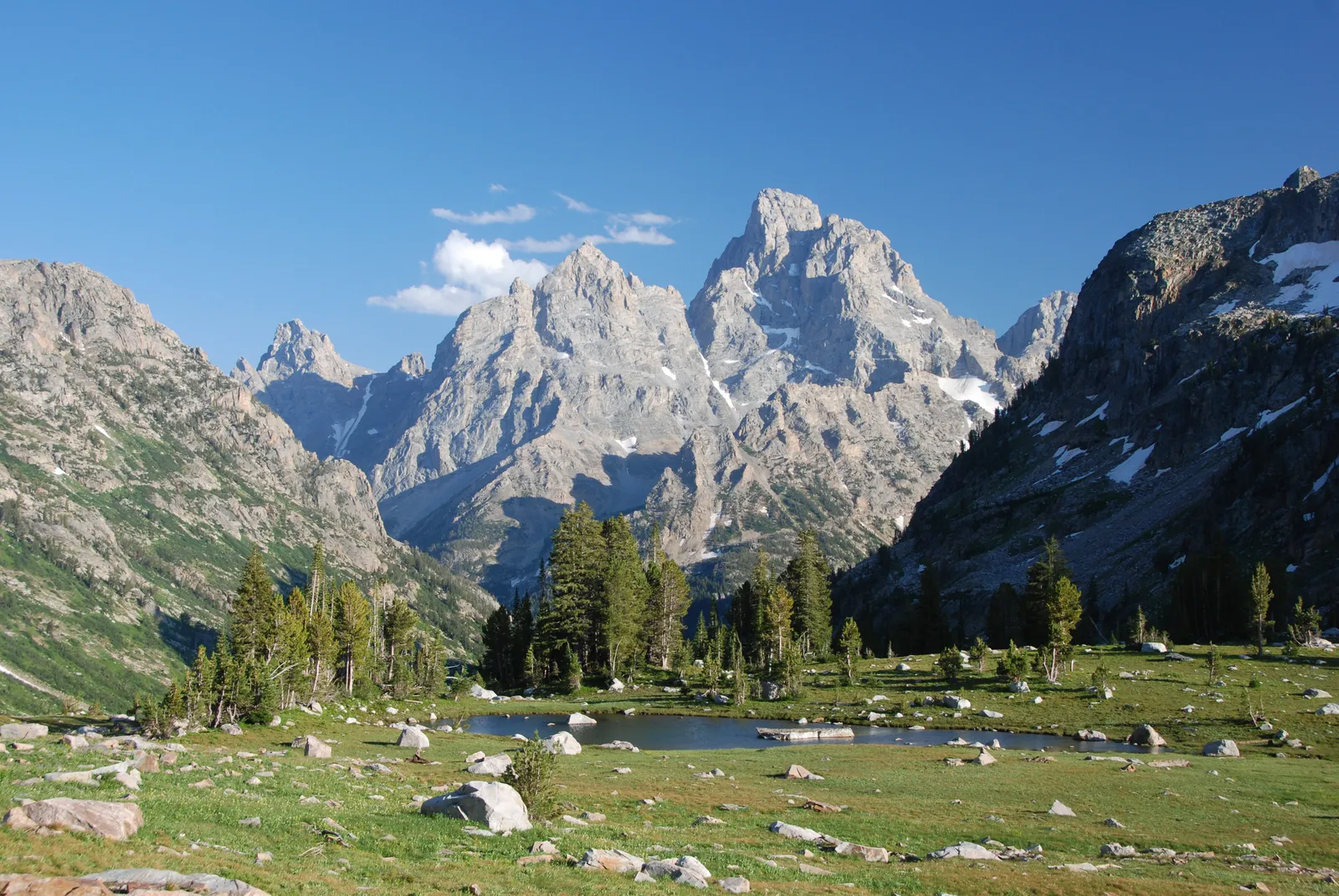
Table of Contents
Grand Teton National Park has no timed entry system in 2026 — you don't need a vehicle reservation to get in. But two significant changes affect planning this year: non-US residents now pay a $100-per-person surcharge on top of the standard entrance fee, and the Death Canyon Trailhead is closed for the summer due to construction. Here's everything else you need to plan a trip that actually goes the way you want.
What Changed for 2026
Starting January 1, 2026, non-US residents aged 16 and older pay an additional $100 per person on top of the standard vehicle entrance fee. This applies at Grand Teton and 10 other high-traffic parks (Acadia, Bryce Canyon, Everglades, Glacier, Grand Canyon, Rocky Mountain, Sequoia & Kings Canyon, Yellowstone, Yosemite, and Zion). The $80 America the Beautiful annual pass is for US residents only — non-residents need the new $250 America the Beautiful Non-Resident Annual Pass, which does cover the $100 surcharge plus three additional adults in your party. If you're hitting two or more of the 11 designated parks as a non-resident, the $250 pass pays for itself.
Death Canyon Trailhead is closed for all of summer 2026 for road construction. If you planned a hike to Phelps Lake or into Death Canyon, you'll need to access it via the Whitegrass Ranch alternate route — it adds about a mile each way. All camping zones inside Death Canyon remain open; just use the alternate access.
The good news: Grand Teton still has no timed-entry vehicle reservation requirement. Unlike Glacier or Zion's narrows-area system, you can show up and drive in any time.
📋 Park hours, entrance fees, live alerts, campground bookings, and trail maps are all on the TrailVerse park page — this guide covers the strategy.
Why This Park Is Worth It
The single most remarkable thing about Grand Teton is how it appears. There are no foothills. No gradual build-up. You're driving through flat Wyoming sage flats, and then a wall of 13,000-foot peaks is simply there — rising straight from the valley floor with nothing to ease you into the scale of it. No other range in the lower 48 does this.
The geology underneath that drama is ancient. The gneiss rock at the Tetons' core is approximately 2.7 billion years old — some of the oldest exposed rock in any American national park — yet the fault lifting these mountains is still active and geologically recent. The range is still rising.
Then there's the wildlife. Grand Teton and the adjacent National Elk Refuge form one of the most intact large-mammal ecosystems remaining in the continental US. Moose, bison, pronghorn, grizzly bear, black bear, wolf, and osprey all live here — and you don't need a backcountry permit to see them. Most are visible from a car window if you know when and where to look.
When to Go (And Why It Matters)
The park draws roughly 3.4 million visitors per year, with July as the peak — over 776,000 visits in a single month. That number should shape your planning.
June is the best-kept secret. Most infrastructure is open by mid-June, wildflowers are at or near peak, the Teton Range still has snow on the upper peaks for dramatic contrast, and the crowds are lighter than what July brings. Wildlife is highly active — bears are foraging, moose cows have calves, and the sage flats are alive. Late June brings afternoon thunderstorms, so start your hikes early.
July and August are the trade-off months. You get the longest days, warmest nights, and full access to every trail and facility. You also get parking lots that fill by 9am and mandatory lightning retreats from above treeline by 2pm on most days. If you go in summer, get up early — before 7am for trailhead parking, before 8am to actually start hiking.
September is what locals recommend. Crowds drop dramatically after Labor Day, the aspen groves along the lower elevation trails turn gold, and the elk rut brings bugling males into the valley. The light is also better for photography — softer, more directional.
Season | Dates | Temps | Crowd | Best For | Watch Out For |
|---|---|---|---|---|---|
Spring | May–Jun | 35–70°F | Low–Moderate | Wildflowers, wildlife calving, fewer crowds | Snow on upper trails through mid-May, afternoon storms start late June |
Summer | Jul–Aug | 50–85°F | Very High | Full access, Milky Way, Teton Crest | Trailhead parking chaos by 9am, daily afternoon lightning |
Fall | Sep–Oct | 30–65°F | Low–Moderate | Elk rut, fall color, uncrowded trails | Lodges close Oct 1, campgrounds Oct 15 |
Winter | Nov–Apr | 10–35°F | Very Low | Snowshoeing, solitude, cross-country skiing | Most park services closed; 13-mile inner loop road closed |
The Trails Worth Knowing About
Don't try to hike everything. The park has over 200 miles of trail, and the most important decision is how you spend your first morning.
Jenny Lake is unmissable — but time it right. The trail around Jenny Lake with a short detour to Hidden Falls and Inspiration Point is the single hike that makes the park make sense for first-timers. Take the boat shuttle from the east shore to cut 4 miles of flat walking and go straight to the climb. The view from Inspiration Point — Jackson Hole valley laid out below you, the Tetons rising behind — is the moment most people understand why this park exists. Get there before 9am or the parking lot will be full.
Taggart and Bradley Lakes are the better answer if Jenny Lake is maxed out. This loop gets far fewer visitors despite delivering the classic Teton scenery — a clear lake, a glacial moraine, wildflowers in late June, and views that would be the centerpiece of any other park. It's also where you're most likely to see moose in the morning hours.
Cascade Canyon earns a full day. The trail into Cascade Canyon is where the park's backcountry personality starts. Fork left at the junction for Lake Solitude — it's one of the best all-day hikes in the Rockies. Snow lingers in upper Cascade Canyon through late June; call the park before going if you're planning this before July 1. Start before 7:30am — afternoon thunderstorms are daily in summer and the open canyon sections have no shelter.
Table Mountain is the view nobody talks about. Technically just outside the park boundary on the Bridger-Teton side, Table Mountain gives you a view into the Tetons from the Idaho side — looking at the western face that most visitors never see. It's a challenging 12-mile round trip but almost always quiet, even in peak season.
What Most People Get Wrong
Moose are more dangerous than bears. Most visitors are vigilant about bears (correctly) and treat moose like slow, photogenic lawn ornaments. Don't. A cow moose with a calf will charge without warning, and moose cause more human injuries in Jackson Hole per year than grizzlies. If a moose is between you and the trail, wait. If it moves toward you, get behind a large tree or structure immediately.
The afternoon thunderstorm window is not optional to plan around. Every summer day in the Tetons, storms build over the peaks and roll into the valley by early-to-mid afternoon. By 2pm, lightning is already hitting above treeline. If you're on the Cascade Canyon trail, Signal Mountain summit, or any exposed ridge when this happens, you have a serious problem. Start hikes by 7:30am in July. Be back at the car or below treeline by 1:30pm.
Cell service does not exist in most of the park. The park's free WiFi at Jenny Lake Visitor Center is the only reliable signal inside the main park area. Download offline maps before you enter — see the gear section for specifics.
The Night Sky
Grand Teton's northern sections hit Bortle Class 2 — dark enough for the Milky Way to cast visible shadows on clear July nights. The park holds some of the best accessible dark skies in the Rocky Mountain region, with the Moulton Barns at Mormon Row and Signal Mountain summit being two of the most-photographed Milky Way locations in the country.
🌌 The Grand Teton Astrophotography Guide is live — Bortle class maps, Nikon Z6II settings, 2026 Milky Way calendar, and best shooting locations. Read the full guide →
Getting There & Base Camp
Jackson, WY is your gateway — 12 miles south of the Moose entrance, full services, hospital, and Jackson Hole Airport (JAC). Jackson Hole Airport is the only commercial airport located inside a US national park, sitting directly within park boundaries. Drive times: 5 hours from Salt Lake City, 1.5 hours from Idaho Falls (often the cheapest flight option).
There is no gas inside Grand Teton National Park. Fill up in Jackson before entering. The drive from the south entrance to the northern Colter Bay area is 40 miles — you don't want to find this out late.
If you're planning to hit Yellowstone too (it's 60 miles north), base in Jackson for southern Teton access or in the tiny town of Moran near the Moran Junction for easier access to both parks. Teton Village (the ski resort, 12 miles west of Jackson) is worth considering for southern trailhead access with fewer crowds than downtown Jackson.
Gear for This Park
Bear spray — required gear for every hiker in the Tetons, worn on your hip, not stored in your pack. Grizzly attacks here are rare but the bear density is real, and bear spray has a documented success rate higher than firearms in deterring charges. Buy it locally in Jackson or Idaho Falls — TSA prohibits flying with it. Practice the safety release once before you hit the trail.
Gaia GPS — download Grand Teton offline before you arrive. Cell service drops everywhere in the park, and printed maps are great until you need to identify which switchback you're on at 5am. The free version handles this fine; Premium adds weather overlays that matter for the afternoon thunderstorm window.
Black Diamond Storm headlamp — for early-morning trailhead starts in July (you're hitting the trail at 5:30am to beat parking and storms) and the red-light mode required for astrophotography at Mormon Row or Snake River Overlook. The Storm's IPX7 waterproof rating handles the thunderstorm risk that makes other headlamps fail at the worst moment.
Darn Tough hiking socks — the trails above 8,000 feet are rocky and uneven, and Grand Teton is where your footwear choices become immediately obvious. Merino wool handles the temperature swings (40°F range in a single summer day) better than any synthetic, and Darn Tough's lifetime warranty backs up the price. Pick the Hiker Boot Sock or Hiker Micro Crew based on your boot height.
Columbia Silver Ridge convertible pants — you'll start hiking at 45°F and end at 80°F. Convertibles aren't glamorous, but you'll wear them every day. The UPF 50 protection matters at 8,000+ feet where UV intensity is brutal, and the zip-off legs save you from packing a separate pair of shorts.
Frequently Asked Questions
What's the best month to visit Grand Teton National Park?
June is the sweet spot for most visitors — lighter crowds than July and August, wildflowers near peak, most facilities open, and wildlife highly active with calving season in full swing. If you want the absolute best conditions and don't mind summer crowds, mid-July through early August gives you the warmest weather, all trails open, and the Milky Way at peak visibility. September is what locals recommend — fall colors, the elk rut, and nearly empty trails.
How does Grand Teton compare to Yellowstone?
They're different parks with different strengths and most people see both in one trip — they're 60 miles apart. Yellowstone is about geothermal features and wildlife density (wolf packs, bison herds). Grand Teton is about dramatic mountain scenery, hiking, and photography. Grand Teton is the better hiking park; Yellowstone is the better wildlife-watching park. If you have 5 days, split 2 nights at Grand Teton and 3 at Yellowstone.
Do I need permits or reservations to visit Grand Teton in 2026?
Grand Teton does NOT require a timed-entry vehicle reservation — you can just drive in. You do need backcountry camping permits for overnight trips (available via Recreation.gov). Non-US residents should budget for the new $100/person surcharge that went into effect January 2026, or buy the $250 Non-Resident Annual Pass which waives it.
How long should I spend at Grand Teton?
Two full days is the minimum to see the highlights — one day for Jenny Lake and the southern valley, one day for the northern sections (Oxbow Bend, Signal Mountain, Mormon Row). Three to four days is ideal if you want to hike Cascade Canyon or do any backcountry. You can combine a Grand Teton visit with Yellowstone in 5–7 days comfortably, which is how most people structure a Wyoming trip.
🗺️ Planning your trip? TrailVerse's AI trip planner builds custom itineraries based on your dates, interests, and pace.
Keep reading
More on this topic from TrailVerse