7-Day Alaska National Parks Itinerary 2027: Kenai Fjords, Denali & Katmai
Three Alaska national parks in seven days — Kenai Fjords, Denali, and Katmai — from one Anchorage hotel, no repacking. A day-by-day plan with Brooks Falls bear timing, the 2027 Denali road reopening news, real 2026 costs, and the exact order to book everything before it sells out.
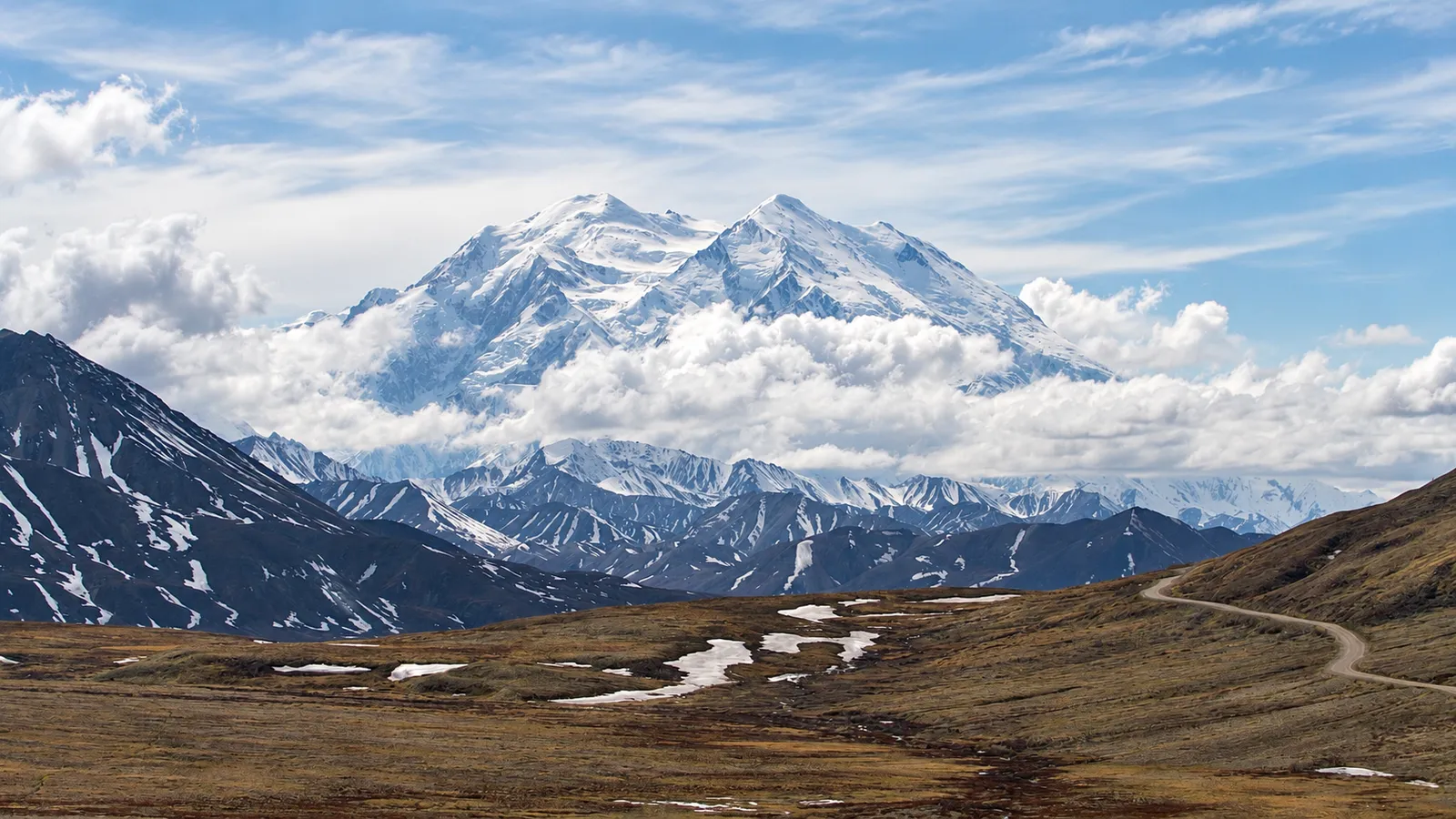
Table of Contents
ALASKA 2027 • 3 NATIONAL PARKS • 7 DAYS
Most 7-day Alaska itineraries move you to a new town every night. This one doesn't. You unpack once in Anchorage, and the parks come to you — by road to Seward, by small plane to Talkeetna and Katmai.
Detail | At a glance |
|---|---|
Trip length | 7 days / 6 nights |
Main base | Anchorage |
Best month | July |
Parks | 3 |
Long days | 2 |
Medium days | 1 |
Recovery / flex days | 2 |
Planning budget | ~$4,300–$5,200 per person, two sharing |
Airfare to Alaska | not included |
⚠️ About the numbers in this guide. Every price here is a 2026-season figure, because no Alaska operator has published 2027 pricing yet. They typically release next season's rates in late fall and winter — realistically between November 2026 and February 2027. Treat these as planning benchmarks, not quotes: build your budget on these numbers now, book refundable where you can, and reconfirm against real 2027 rates once they post
Can you visit Kenai Fjords, Denali and Katmai in 7 days?
Yes — but only if you stop treating them as three road trips.
They aren't. Each park reaches you a different way, and that's the whole trick:
Kenai Fjords — a road trip to Seward plus a boat. The only part of the park you can drive to is Exit Glacier; everything else is water.
Denali — a flight from Talkeetna in this version of the trip, not a drive to the park entrance.
Katmai — air access only. There is no road to Brooks Falls. None.
Anchorage — the hinge that makes all three reachable without moving hotels.
The itinerary most people write instead runs Anchorage → Denali → Anchorage as a single day. That's roughly nine hours of driving to spend a few hours somewhere you needed two days to appreciate. It's the single most common way to waste a day in Alaska.
This plan trades that marathon for a two-hour drive to Talkeetna and an hour in the air over the Alaska Range — and gives you back a full day for weather to go wrong.
Denali's road is reopening — and it changes this trip
This is the biggest Alaska planning story in five years, and it broke while this guide was being written.
On September 2, 2026, the National Park Service finished the Pretty Rocks Bridge — a 475-foot steel truss span at Mile 45 of the Denali Park Road, crossing the landslide that severed the road in August 2021. The park held a ribbon-cutting the next day. The project ran roughly $230 million.
The part that matters to you: NPS says "full bus service along the Denali Park Road is expected to resume in 2027." Superintendent Brooke Merrell put it as looking forward to "welcoming visitors back to the west end by bus in 2027."
If that holds, 2027 is the first summer since 2021 that buses reach Eielson Visitor Center (Mile 66), Wonder Lake (Mile 85) and Kantishna (Mile 92).
What is not confirmed yet: the exact opening date, which mileposts buses will actually serve, 2027 bus routes and prices, whether the Road Lottery comes back, and whether Wonder Lake Campground reopens on the same schedule.
🛑 Plan for it, don't bet on it. This road has slipped before — repeatedly, for five years, on permafrost, in Alaska. Treat summer 2027 as the park's stated plan rather than a promise, and check nps.gov/dena and reservedenali.com before you commit money to a Denali-centered version of this trip.
Bus reservations for a given summer have historically opened December 1 of the prior year. For 2027, that means around December 1, 2026 — not yet announced.
Why Anchorage works as your base
The relaxation in this itinerary doesn't come from doing less. It comes from not packing every morning.
Anchorage earns the job for specific reasons:
You unpack once, for six nights.
Recovery days actually work, because you're already home.
Your arrival and departure airport is the same building you keep returning to.
Hotel inventory is large enough that July doesn't leave you with one bad option.
Groceries and real restaurants are here. Seward, Talkeetna and King Salmon are thinner and pricier.
Lake Hood — the floatplane base your Katmai flight likely leaves from — is minutes from the airport.
Seward is a two-hour drive on paper, closer to three in practice. Talkeetna is about the same. Katmai flights originate here.
The honest disadvantage: Anchorage is not close to Denali National Park. The park entrance is about 240 miles and four and a half hours north. That's not a day trip anyone enjoys.
So the rule is simple:
Anchorage works as your base if your Denali experience is flightseeing. If you want the park road, change the itinerary and sleep near the park for two nights.
The Day 4 section lays out both versions, and 2027's road news makes that a real decision rather than a formality.
Best month for this trip: July
If you take one thing from this guide, take this one. July is the answer, and Katmai is the reason.
Here's what each park wants from your calendar.
Kenai Fjords
Solid all summer. Major Marine's glacier cruises ran May 2 through September 21 in 2026, so July sits comfortably mid-season with the fullest schedule and the best chance of rebooking if your first attempt gets weathered out.
Denali
Long daylight and peak operating season. Anchorage gets about 18 hours and 23 minutes of daylight on July 15, plus hours of twilight on either side. Flightseeing operators are running their full schedules.
Katmai — this is the deciding factor
At Brooks Falls, sockeye salmon have to jump the falls to continue upstream, and in July the run concentrates right at that barrier. That's what produces the photograph you already have in your head — a brown bear standing in whitewater with a salmon mid-air.
Per NPS, more people visit Brooks Camp in July than any other month, and that's not marketing. It's where the fish are.
Month by month
Month | Kenai Fjords | Denali | Brooks Falls |
|---|---|---|---|
June | Cruises running, puffins active | Long days, full season | Weak — little food available, bears dispersed and only infrequently seen |
July | Peak schedule, best rebooking odds | Peak daylight and operations | The iconic month — salmon massed at the falls |
August | Still strong | Still strong | Risky — the run spreads through the river and "almost all of the bears will leave the area" |
September | Season winding down, weather turning | Shorter days, colder | Bears return in numbers for spawned-out carcasses — but mostly along the lower river, not the falls |
🐻 If Brooks Falls is the reason you're taking this trip, don't default to August because August is peak Alaska tourism. NPS's own guidance is blunt: there are "typically days in August when no bears are seen" at the falls. September is genuinely good bear viewing — bears come back to feed on dying salmon and are typically less aggressive toward each other — but it's a different photograph, taken somewhere else on the river.
The full 7-day overview
Day | Main plan | Location | Intensity | Sleep |
|---|---|---|---|---|
1 | Arrive and settle | Anchorage | 🟢 Easy | Anchorage |
2 | Kenai Fjords cruise | Seward | 🔴 Long | Anchorage |
3 | Anchorage and recovery | Anchorage | 🟢 Easy | Anchorage |
4 | Denali flightseeing | Talkeetna | 🟡 Medium | Anchorage |
5 | Flex / weather day | Anchorage | 🟢 Easy | Anchorage |
6 | Katmai / Brooks Falls | Katmai | 🔴 Long | Anchorage |
7 | Departure | Anchorage | 🟢 Easy | — |
Two long days. One medium. Two genuinely open ones. Six nights in the same bed.
Day 1 — Arrive in Anchorage 🟢
Land, get the car, get to the hotel, buy groceries, eat, sleep. That's the whole day, and it should be.
Don't try to use every hour just because you're finally in Alaska. Day 2 starts before 6 AM, and the light will fool you — it's bright at 10 PM in July, and that's exactly how people burn themselves out on night one.
What's actually worth doing:
Groceries. Fred Meyer at 1000 E Northern Lights is the closest full store to downtown and midtown. Carrs/Safeway and a midtown Costco round out the options. Stock breakfast, snacks and boat-day lunches now — Seward, Talkeetna and King Salmon are thinner and cost more.
Buy bear spray here if you plan any ground hiking. You could not have flown with it (more on that in packing).
Sort your layers, camera and daypack tonight. You'll be moving in the dark-ish early hours tomorrow, and you don't want to be hunting for a rain shell at 5 AM.
Eat something easy and close. Save the good dinner for Day 3.
Day 2 — Kenai Fjords 🔴
Anchorage → Seward → glacier cruise → Anchorage. This is one of the two long days, and pretending otherwise helps nobody.
5:30 AM — leave Anchorage
Anchorage to Seward is about 120 miles and nominally "just over two hours." Budget two and a half to three. For a 9:30 AM cruise departure, leave by 6:00 AM at the very latest, and 5:30 gives you margin you'll be glad to have.
Operators generally want you at the harbor 30 to 45 minutes before departure.
The Seward Highway
This drive is a legitimate attraction, which is part of the timing problem. You'll run along Turnagain Arm with the Chugach on one side and one of the world's biggest tidal ranges on the other, past Beluga Point and Bird Point, then inland through Girdwood, Tern Lake and Moose Pass.
You will want to stop. Build that into the buffer rather than eating into it.
🚧 Construction to check. The Seward Highway MP 90–99 pavement project has been running nightly delays and flagging, with completion anticipated in June 2027 — which means it could still be active early in the 2027 travel season. A separate rehab near Moose Pass (MP 25.5–36) was at 95% design in early 2026 with no construction start announced. Check Alaska 511 before you drive.
Exit Glacier — the only part of the park you can drive to
Exit Glacier sits 8.4 miles up Herman Leirer Road from Mile 3 of the Seward Highway, and it's the only road-accessible section of Kenai Fjords. Everything else in this park is reached by boat or on foot across ice.
Glacier View Loop — about a mile, easy, gets you the view. This is the version that fits today.
Harding Icefield Trail — 8.2 miles round trip, roughly 3,500 feet of gain, 6 to 8 hours. Snow lingers up top into early July.
The road opens for the season once snow clears — it reopened May 14 in 2026. Parking is congested between 10:30 AM and 3:30 PM.
If you're doing a 7.5-hour cruise, you are not also hiking the Harding Icefield today. Pick one. The realistic combination is the Glacier View Loop before or after the boat, and nothing more ambitious than that.
The cruise
The 6-hour cruise is the shortest option that reliably reaches a tidewater glacier. Anything shorter stays in Resurrection Bay, which is a pleasant wildlife trip and not a national park glacier trip.
Major Marine's 2026 lineup, as a benchmark:
Tour | Duration | Glaciers | Adult price |
|---|---|---|---|
Northwestern Fjord | 8.5 hr | 3 tidewater | $309 |
Kenai Fjords National Park | 7.5 hr | Holgate + Aialik | $269 |
Kenai Fjords National Park | 6 hr | 1 tidewater | $239 |
Resurrection Bay Wildlife | 4 hr | none | $149 |
Kenai Fjords Tours runs a parallel lineup out of the same harbor — an 8-hour Northwestern trip, a 6-to-7-hour Captain's Choice, a Classic park tour and a glacier dinner cruise. Check their current pricing directly; third-party listings for this operator disagree with each other.
The 6-hour cruise is the sweet spot for this itinerary. It gets you a tidewater glacier, keeps you in slightly more protected water, and gets you back to Seward early enough that the drive home isn't brutal.
What you might see
Likely: harbor seals hauled out on glacier ice, Steller sea lions, sea otters, bald eagles, kittiwakes, mountain goats on the cliffs.
Good chance: humpback whales, Dall's porpoise, puffins — best from mid-May through July.
Lucky: orcas, black bears on the shoreline.
Wildlife is possible, not guaranteed. Operators sell the highlight reel; the ocean doesn't sign off on it.
🧭 One correction worth knowing. NPS states plainly that "Kenai Fjords National Park does not have any authorized concessioners or park rangers on boat tours." Nobody on your boat is a park ranger. The narration comes from the captain and crew, and it's usually good — just don't book expecting a ranger program.
Is this day exhausting?
Yes. Out the door around 5:30 AM, three hours of driving each side of a six-hour boat, back in Anchorage between 6 and 8:30 PM depending on your cruise. That's a 14-hour day.
It's worth it. It's also why Day 3 exists.
Kenai Fjords: is it worth it?
Yes, if you want: tidewater glaciers calving, marine mammals at close range, and fjord scenery you cannot get any other way in this park.
Maybe skip or shorten if: you get seriously seasick, you hate long drives, or your forecast is genuinely bad. The water inside Resurrection Bay is usually manageable; the crossing out to Aialik or Northwestern is where it gets rough, and it varies day to day. Take motion-sickness medication the night before rather than the morning of, and stand midship.
Day 3 — Anchorage recovery day 🟢
Today should feel like a day off, because it is one. It's also your first weather buffer — if Day 2 got moved or cut short, this is where it lands.
Good options, none of them mandatory:
Alaska Native Heritage Center — the most substantive cultural stop in the city, and a genuinely different experience from everything else on this trip.
Anchorage Museum — strong Alaska history and art collections; easy rainy-day answer.
Tony Knowles Coastal Trail — flat, paved, right along the water. Walk a stretch of it or rent a bike.
Potter Marsh — boardwalk over a wetland on the south edge of town. Birds, sometimes moose, twenty minutes from downtown.
Optional harder activity: Flattop Mountain. Short by distance, steep by profile, with a scrambly final push to the summit. Good hike. Not a recovery activity — if you do Flattop, you've spent the rest day.
Today is also when you do the unglamorous things: laundry, restock snacks, reconfirm tomorrow's flight, charge everything.
Day 4 — Denali 🟡
There are two honest ways to experience Denali, and for the first time since 2021, both are genuinely on the table.
Option A — Talkeetna flightseeing (what this itinerary uses)
Anchorage → Talkeetna (about 115 miles, roughly 2 hours 15 minutes) → flightseeing, optional glacier landing → back to Anchorage.
What you actually see: the Kahiltna Glacier running down out of the range, Kahiltna Base Camp where climbers stage for the summit, Mount Foraker, the Ruth Glacier and Ruth Gorge, the granite walls of the Don Sheldon Amphitheater, and — weather permitting — Denali itself.
2026 pricing from the three main Talkeetna operators:
Operator | Tour | Flight only | With glacier landing |
|---|---|---|---|
Denali Flyer (1.25 hr) | $370 | $500 | |
K2 Aviation | Denali Grand Tour (1.5 hr) | $445 | $575 |
Summit Tour (1.5 hr) | $495 | $620 | |
Denali Mountaineer | from $430 | not itemized |
Sheldon Air Service lists a separate $15 per person NPS glacier-landing pass on top of the tour price, because you're touching down inside the park — ask your operator whether that's bundled or billed separately. Talkeetna Air Taxi's published rates step up to $550 / $700 on October 1, 2026, which tells you which direction 2027 pricing is heading.
Budget $500 to $700 per person for a tour with a landing, $305 to $445 without.
The glacier landing is worth the surcharge. Standing on the Ruth in silence, surrounded by granite walls, is a different category of experience from seeing it through a window.
What flightseeing is not: wildlife viewing. You won't pick out grizzlies, caribou and wolves from a plane. That's the park road's job.
Weather reality: no operator publishes a cancellation rate, and Denali's summit is famously visible only about a third of days. Planes often fly into the range with the summit socked in, which is still spectacular but isn't the postcard. Operators reschedule first and refund if they can't. This is why you booked it on Day 4 and not Day 6.
Option B — the full Denali park road experience
If Denali itself is the point of your trip, change the itinerary and sleep near the park for two nights.
Here's where 2027 gets interesting. Since August 2021, the road has been closed at Mile 43 (East Fork) because of the Pretty Rocks landslide. Through the 2026 season, that meant:
Private vehicles only to Mile 15 (Savage River check station)
Transit buses to Mile 43 — $33.50 adult, entrance fee not included
Tundra Wilderness Tour to Mile 43 — $144.75 adult, about 5.5 hours
Denali Natural History Tour to Mile 17 — $116.75 adult
No Eielson Excursion, no Kantishna Experience, no Toklat or Teklanika tours
Eielson Visitor Center and Wonder Lake unreachable
Road Lottery suspended indefinitely
With the bridge complete, NPS expects full bus service to the west end to resume for the 2027 season — Eielson, Wonder Lake, Kantishna. Routes, mileposts, dates and prices for 2027 have not been published. Reservations have historically opened December 1 of the prior year at reservedenali.com.
Denali also charges a $15 per person entrance fee, valid 7 days. It's included in narrated tour bus tickets but not in transit bus tickets — pay it separately if you're riding a green bus.
Which one should you pick?
Option | Talkeetna flightseeing | Denali park road |
|---|---|---|
Base | Anchorage | Denali area |
Time needed | 1 day | 2–3 days |
Best for | Mountains, glaciers, scale | Wildlife, tundra, the actual park |
Driving | ~4.5 hrs round trip | ~9 hrs round trip from Anchorage |
Weather dependency | High — no flight, no trip | Moderate — buses run in rain |
Hotel move | No | Yes, 2 nights |
Cost | $500–$700 with landing | $33–$145 bus + 2 nights lodging |
2027 status | Operating normally | Reopening expected, not confirmed |
Best for this itinerary | ✅ | — |
Flightseeing wins for this specific trip because it protects the thing that makes the whole week work: you don't move hotels, and you keep your buffer days.
But if 2027 delivers a fully open park road for the first time in six years, and wildlife is what you came for, that's a legitimate reason to build a different trip. Version A in the alternatives section shows you how.
Day 5 — Weather buffer 🟢
This is not a wasted day. It's the reason the itinerary survives contact with Alaska.
Alaska weather will eventually win something. Boats get rough. Flights get scrubbed for visibility. A forecast that looked fine on Tuesday is fog on Thursday. Seward sees a wet day 38 to 45% of the time in July; Talkeetna about 38%.
So Day 5 is deliberately empty. Options, in rough priority order:
Reschedule whatever got cancelled. This is the day's real job.
Anchorage Museum or the Native Heritage Center, if you skipped one on Day 3.
Coastal Trail, Potter Marsh, or a drive down Turnagain Arm to Girdwood.
Laundry, repacking, and a proper meal out.
Nothing at all. That's allowed.
A completely full Alaska itinerary looks efficient on paper and fragile in real life.
Two empty days out of seven feels wasteful until the morning your Katmai flight can't take off.
Day 6 — Brooks Falls and Katmai 🔴
The most expensive day of the trip, the most logistically involved, and for a lot of people the reason the trip exists.
How you actually get there
There are no roads to Brooks Camp. None. Two routings:
Direct floatplane from Anchorage — Lake Hood straight to Brooks Camp, roughly 2 to 2.5 hours each way. Katmai Air prices this at $1,489 round trip, taxes and fees included.
Via King Salmon — a pressurized flight from Anchorage to King Salmon (about an hour), then a 20-minute floatplane hop across Naknek Lake to Brooks. Katmai Air's combined fare is $1,989 round trip; the King Salmon–Brooks floatplane leg alone is $500 round trip. The larger aircraft on the first leg handles marginal weather better.
Day-trip packages generally leave Anchorage between 7 and 8 AM and return around 6:30 to 7 PM — 10 to 12 hours door to door, with about 4 hours on the ground.
What it costs
Operator | 2026 price | Notes |
|---|---|---|
from $1,095+ | Anchorage seaplane | |
Alaska Air Service | ~$1,280 | Guided, via King Salmon |
Trail Ridge Air | from $1,250+ | Season quoted Jul 1 – Sep 30 |
$1,395 + 3% tax + $30 fee | Box lunch included | |
Regal Air | $1,450 | 4+ hrs ground time, lunch extra |
$1,489 direct / $1,989 via King Salmon |
Shop this. The spread between the cheapest and most expensive credible operator is roughly $400 per person, and what you're comparing is aircraft type, ground time, whether lunch is included, and how the operator handles a weather scrub.
Bear school
Every visitor attends a mandatory bear-safety orientation at the Brooks Camp Visitor Center on arrival, before going anywhere else. It covers the rules, the distances, and what to do when a bear decides the trail is his.
This is not a formality. Brooks Camp puts a few hundred people and a few dozen brown bears in the same square mile, all summer, and the reason that works is that everybody gets the same briefing.
The walk to the falls
About 1.2 miles each way, mostly flat and well-maintained, from the Visitor Center to the Falls Platform.
The Brooks River bridge is a regular bear crossing point. Rangers manage foot traffic across it and close it entirely when a bear comes within 50 yards of either end. You may wait. That wait is part of the experience, not a failure of it.
During peak season (June 15 – August 15) a closure zone extends 50 yards from the river and 100 yards from the falls, with marked detours. Minimum distance from any bear is 50 yards, always.
The platforms
Platform | Rules | What it's for |
|---|---|---|
Falls | 40-person capacity. When full, everyone is limited to a half hour at a time, ranger-run wait list. Midday July waits often run 1.5–2 hours. | The salmon-jumping shot |
Riffles | No capacity limit, no time limit, tripods allowed | Sows with cubs, subadults, longer relaxed viewing |
Lower River | ~0.3 mi from the Visitor Center, easiest access | River-mouth activity |
All platforms close 10 PM to 7 AM from June 15 to August 15, so bears have the river to themselves overnight.
📷 Photographers, read this twice. Expanded tripods and rail-mounted fixtures are prohibited on the Falls Platform from June 15 to August 15, sometimes extended into late August and September. A tripod collapsed to monopod configuration is allowed if it isn't self-supporting. Plan on hand-holding a long lens.
🐻 Brooks Falls is not the only good bear viewing at Brooks Camp. With a 4-hour ground window and a possible 2-hour wait at the falls, the Riffles Platform — no line, no clock, tripods legal — is often where you get your best hour. Budget the falls for the shot and the Riffles for the watching.
Fees
Katmai charges no entrance fee. You do need a $6 Recreation.gov Brooks River Corridor day-use permit (required June 15 – October 31, valid 7 days). Some operators also pass through a roughly $30 concessioner fee.
Is Katmai worth $1,500?
Yes, if: brown bears are a genuine bucket-list item, this might be your only Alaska trip, or wildlife photography is a real priority for you. There is no cheaper substitute — this specific experience exists in a handful of places on Earth and Brooks Falls is the most reliable one.
Skip or replace if: the budget is tight and you'd rather spend it on lodging and food quality, weather risk on a one-shot day genuinely stresses you out, or you're honestly more of a landscape person than a wildlife person.
If you replace it, good uses of that day and that money: a second Kenai Peninsula day (Resurrection Bay kayaking, Seward's SeaLife Center, the Harding Icefield Trail done properly), a Prince William Sound glacier cruise out of Whittier, or the Matanuska Glacier for a guided ice walk. None of them are brown bears at a waterfall. All of them are good days.
Book this one early
Peak dates fill up to six months in advance, per operators.
🔔 Time-sensitive if you're reading this in 2026: the 2027 Brooks Lodge lottery has already closed — the application window ended December 30, 2025. Brooks Lodge is bookable June 20 – September 18, 2027 for those who got in. Day trips don't require a lodge reservation and are still bookable, which is exactly what this itinerary uses.
If the weather cancels it
Operators generally refund weather cancellations — Fly Katmai states a 100% refund for weather or mechanical cancellations. You get your money back. You don't get the day back.
That's the entire argument for putting Katmai on Day 6 with Day 5 open behind it, rather than on Day 7 on the way to the airport.
Day 7 — Departure 🟢
Return the car, fly home. If you have a late flight, the Coastal Trail or a last museum hour fills it without risk.
Leave the bear spray behind — you can't fly with it, in checked bags or carry-on. Most hotels and outfitters will take it, and plenty of Anchorage travelers hand theirs off at the rental counter or to another visitor.
What this trip actually costs
Roughly $4,300 to $5,200 per person, for two travelers sharing a room and a car, before airfare to Anchorage.
Every figure below is a 2026-season benchmark. 2027 pricing isn't published.
Experiences
Item | Per person |
|---|---|
Kenai Fjords 6-hour cruise | $239 |
Denali flightseeing with glacier landing | $500 |
Katmai day trip | $1,489 |
Denali entrance fee | $15 |
Brooks River day-use permit | $6 |
Subtotal | ~$2,249 |
That's more than half your budget in three activities, and it's not padding — those three things are the trip.
Hotel
Anchorage in July is peak season. A realistic planning estimate for a solid mid-range hotel is $200 to $350 per night, higher for downtown upscale properties. Over six nights split two ways, that's roughly $600 to $1,050 per person.
Beware the teaser rates you'll see on booking sites — those are low-season anchors, not July.
Rental car
Peak-summer rates run $100 to $120+ per day for a compact or midsize with taxes and fees. Seven days split two ways lands around $350 to $420 per person.
Alaska rental fleets are thin and demand compresses into a short season. In bad years it's not just expensive — cars actually run out.
Do you need it all seven days? Look at your itinerary honestly:
Day 2 (Seward): yes, absolutely.
Day 4 (Talkeetna): yes, unless you take the Alaska Railroad's Denali Star, which runs daily in summer and reaches Talkeetna around 11 AM from an 8:20 AM Anchorage departure.
Day 6 (Katmai): no. You're on a plane all day.
Days 1, 3, 5, 7 (Anchorage): maybe not, if you stay somewhere walkable.
A shorter rental plus taxis is worth pricing. But don't assume rideshare will cover you — Uber and Lyft operate in Anchorage with thin driver supply, especially at the airport in peak months. Yellow Cab (907-222-2222) is the more dependable fallback at around 15 to 20 minutes. Also compare airport versus off-airport pickup; skipping the airport concession fee can be worth the transfer hassle.
Food
Style | Per person, 7 days |
|---|---|
Budget — groceries, packed lunches, a few dinners out | ~$350 |
Moderate — breakfast and lunch handled, dinners out | ~$600 |
Restaurants every meal | $900+ |
The Day 2 and Day 6 lunches are worth packing regardless of your style. You'll be on a boat and on a plane.
Fuel, parking, incidentals
$150 to $250 per person. Seward and Talkeetna round trips are the fuel; downtown Anchorage hotel parking runs $25 to $30 a day.
Solo versus couple
Travelers | Per person |
|---|---|
Two sharing | ~$4,300–$5,200 |
Solo | ~$5,300–$6,600 |
The math is simple and unkind. Tours are per person and don't change. The hotel and the car stop splitting.
Where to save, where to splurge
Splurge: Katmai. It's the least substitutable thing on the itinerary.
Keep: the 6-hour Kenai Fjords cruise. Going shorter drops the tidewater glacier, which is the point. Going longer is nice, not necessary.
Optional upgrade: the Denali glacier landing. About $125 to $130 over the flight-only price, for the part you'll actually remember.
Save on: breakfast and lunch, hotel tier, rental days you don't need, paid Anchorage activities, souvenirs.
💵 Plan around $5,000 per person and be pleased when you beat it.
Where to stay in Anchorage
Pick the area first, the hotel second. All three areas work; they solve different problems.
Downtown
Best for: restaurants within walking distance, the Anchorage Museum, and having somewhere to go on your rest days without driving.
Tradeoff: paid parking, typically $25 to $30 a day.
Well-regarded properties: Hotel Captain Cook, Hilton Anchorage, Anchorage Marriott Downtown, The Wildbirch, Salted Roots Basecamp.
Midtown
Best for: free parking, easier access to groceries and the highway, and generally better value per dollar.
Tradeoff: you're driving to dinner.
Lake Hood / airport
Best for: early aviation days. Your Katmai flight likely departs from Lake Hood, and a 7 AM check-in is a very different experience from ten minutes away than from downtown.
Properties here include Embassy Suites Anchorage and The Lakefront Anchorage, which overlooks the floatplane base — worth it on its own for the plane-watching.
For this itinerary, midtown or Lake Hood usually wins. You have two pre-dawn starts and two lazy days, and free parking plus a short airport run beats walkability more often than you'd think.
Rental car strategy
You need a car for Seward on Day 2 and Talkeetna on Day 4. Everything else is negotiable.
Book it early. Peak-summer availability in Anchorage is a real constraint, not a pricing tactic — there have been summers when cars simply ran out.
Compare four things:
Airport versus off-airport. Off-airport pickup skips the concession recovery fee, but adds a transfer at both ends.
Full week versus split rental. Returning the car before your Katmai day and re-renting is sometimes cheaper, sometimes a headache. Price it.
Costco Travel and rate trackers. Both come up repeatedly from Alaska travelers for a reason.
What you actually need. A midsize handles every road in this itinerary. Nothing here requires 4WD or clearance.
What to book first
Book in this order. It's determined by what's scarcest, not by what's most expensive.
Tier 1 — book first
Katmai bear-viewing flight. Limited seats, sells out up to six months ahead, and it's the piece the whole route bends around. If you can't get the date, everything else shifts.
Anchorage hotel. Six nights in July in a city with finite good inventory.
Rental car. Peak summer, thin fleet.
Tier 2
Kenai Fjords cruise. Popular but with more daily capacity and more sailings.
Denali flightseeing. Multiple operators, multiple daily departures, easier to move.
Tier 3
Anchorage activities, restaurant reservations, museum tickets.
⚠️ Read the cancellation policies before you stack nonrefundable bookings back to back. Two of the three signature experiences on this trip are weather-dependent, and your flexibility is worth more than a small prepay discount.
Booking timeline
Time before trip | What to do |
|---|---|
9–12 months | Lock the hotel. Start watching Katmai operators. |
6–9 months | Book Katmai. Book the rental car. |
3–6 months | Book the Kenai Fjords cruise and Denali flightseeing. |
1–3 months | Restaurants, the detailed daily route, any Denali bus tickets if you switched to the park-road version. |
1 week | Weather trends, NPS alerts, Alaska 511 for Seward Highway construction. |
24 hours | Reconfirm every flight and the cruise. Check the Brooks Camp forecast. |
Verify each operator's actual release date rather than trusting this table blindly. Denali bus reservations have historically opened December 1 of the prior year; the 2027 date hasn't been announced.
Packing list
July in Alaska is cool and wet, not warm. Anchorage averages about 67°F; Seward about 61°F with a 38 to 45% chance of a wet day.
Weather layers
Waterproof shell with a hood — non-negotiable; Seward sees a wet day nearly half of July
Light puffy or synthetic insulated jacket — the boat deck at glacier speed is genuinely cold
Fleece midlayer — the layer you'll actually wear most days
Merino or synthetic base layers (2–3)
Hiking pants, not jeans
Warm hat and light gloves
Wildlife
Binoculars — the most underrated item on this list. Half of what you'll see at Kenai Fjords and Brooks Falls is too far away for a phone. A compact 8x42 is the sweet spot for handheld use on a moving boat.
Long lens if you shoot — 200mm minimum, 400mm+ preferred for the falls
Boat day
Motion-sickness medication, taken the night before
Waterproof phone pouch
Sunglasses — glacier glare off water is real
Bugs
Picaridin insect repellent or DEET — Brooks Camp and any wetland stop earn it
Head net — you'll feel silly buying it and grateful at Brooks Camp
Day hiking
Water, snacks, sunscreen, small first aid kit
Electronics
Battery bank and every charger — cold drains phones and cameras faster than you expect
Offline maps (Gaia GPS) downloaded before you leave Anchorage — coverage on the Seward Highway is patchy
🚫 Bear spray cannot fly with you. It's prohibited in both carry-on and checked baggage on commercial flights — an outright ban, not a size limit. Buy it in Anchorage, use it, and leave it behind. Some outfitters rent it.
What not to pack
Cotton hiking clothes — wet cotton in a 55°F wind is genuinely miserable
A large suitcase, if you're flying small aircraft (weight limits are real)
Heavy mountaineering boots — nothing here needs them
A drone — NPS prohibits launching from park lands
Your entire camera bag — you're carrying it 1.2 miles to the falls and hand-holding it
"Just in case" gear for scenarios this itinerary doesn't include
Weather and cancellation strategy
Three of your experiences depend on three different kinds of weather, and they don't fail together.
Kenai Fjords — marine conditions. The cruise usually runs; the question is how rough it is and whether the outer fjords are reachable.
Denali flightseeing — visibility and aviation weather. The most likely thing to be scrubbed outright.
Katmai — flight conditions at both ends, plus Naknek Lake. A fogged-in morning cancels the whole day.
That's why Days 3 and 5 are soft.
One more variable that doesn't show up in a rain forecast: wildfire smoke. Interior Alaska burns most summers, and in a bad July, smoke can drift toward the Talkeetna and Denali corridor and ground or scrub flightseeing on an otherwise clear day. It's usually a July-into-August issue and it comes and goes with the wind. Check air quality separately from the weather — the AirNow.gov map covers Alaska — and treat it as one more reason the flightseeing day sits ahead of an open buffer day.
Plan A — everything runs as scheduled. Days 3 and 5 stay easy.
Plan B — Kenai Fjords gets delayed or cancelled. Move it into Day 3. You lose a rest day and keep the park.
Plan C — flightseeing gets scrubbed on Day 4. Move it to Day 5. Operators reschedule readily when they have seats.
Plan D — Katmai gets cancelled. This is the hard one. Availability may simply not exist for a replacement day, especially in July. Mitigations, in order:
Book Katmai for Day 6, not Day 7, so a scrub can slide backward into a real day rather than off the end of the trip.
Ask your operator at booking how they handle weather rescheduling and whether they hold standby seats.
Consider the King Salmon routing — the larger pressurized aircraft on the Anchorage leg handles marginal weather better than a floatplane the whole way.
Know your Plan B day (Prince William Sound, a second Kenai day, Matanuska) so a cancellation becomes a pivot instead of a wasted morning.
Five ways to change this itinerary
The route is a starting point, not a prescription. Here's how to bend it.
Version A — Wildlife first
Change: drop the Talkeetna flightseeing, add two nights near the Denali park entrance and ride the bus deep into the park.
Why 2027 specifically: if full bus service to Eielson and Wonder Lake resumes as expected, this is the first summer since 2021 that the park road delivers the real Denali experience — tundra, caribou, grizzlies at distance, Wonder Lake.
Cost: you'll spend less on activities (bus tickets run $33 to $145) and more on lodging. Confirm the road status before you commit.
Version B — Budget
Change: cut Katmai.
Effect: roughly $1,500 per person off the top. The week drops to something like $2,800 to $3,700 per person. Replace Day 6 with a Prince William Sound glacier cruise from Whittier or a second Kenai Peninsula day and you still have a strong trip.
Version C — No small planes
Change: cut both Katmai and the flightseeing.
What's left: Kenai Fjords, Exit Glacier and the Harding Icefield Trail, Anchorage, Turnagain Arm, and either the Denali park road by bus or Matanuska Glacier. Everything reachable by road or large boat. Substantially cheaper and entirely legitimate.
Version D — Photography
Change: July, non-negotiable. Long lens. Add days rather than activities.
Prioritize the Riffles Platform over queuing at the falls, take the longer Kenai Fjords cruise for more glacier time, add the glacier landing at Talkeetna, and use the late Alaska light — golden hour runs for hours in July. Remember the tripod restriction at the falls.
Version E — Family
Change: shorten the long days.
Take the 6-hour Kenai Fjords cruise rather than the 8.5-hour, or the 4-hour Resurrection Bay wildlife cruise for younger kids. Consider the train to Talkeetna instead of driving. Note that Talkeetna Air Taxi's Summit Tour is age 12 and up, while K2 prices child fares from age 3 — check the operator's minimum before you build the day around it.
Is this itinerary actually relaxed?
Relative to Alaska, yes. Relative to a beach, no.
Here's the honest accounting:
2 long days (Kenai Fjords, Katmai — both around 12 to 14 hours)
1 medium day (Denali flightseeing, roughly 8 hours with the drive)
2 genuinely open days
1 arrival, 1 departure
6 nights in the same bed
Compare that to the standard Alaska loop: Anchorage, then Seward, then Denali, then back — three or four hotels, a suitcase repacked every morning, and 15+ hours of driving spread across the week.
The relaxation comes from removing transitions, not from removing adventure. You still get a tidewater glacier, the Alaska Range from 3,000 feet, and brown bears at a waterfall. You just don't spend the trip checking out of places.
Who this trip is for
Good fit:
Couples and pairs — the cost math works dramatically better than solo
First-time Alaska visitors who want the signature experiences
National park collectors — three in a week is efficient
Wildlife lovers, especially anyone who wants bears
People who hate changing hotels
Travelers comfortable spending real money on a few signature things
Not ideal:
Ultra-budget travel — this is not a cheap week even trimmed
Anyone uncomfortable in small aircraft — two of three parks depend on them
Hikers who want a real backcountry objective every day
Travelers whose main goal is Denali wildlife bus touring — build Version A instead
Campers and RV travelers — the whole structure assumes a fixed hotel base
Frequently asked questions
Can I really see three Alaska national parks in seven days?
Yes, because each one is reached differently — a drive to Seward for Kenai Fjords, a flight from Talkeetna for Denali, and a floatplane for Katmai. What makes it work is that you never move hotels and you leave two days open for weather.
Is Anchorage a good base for Alaska national parks?
It's excellent for Kenai Fjords, Katmai and Talkeetna flightseeing, and poor for the Denali park road. The park entrance is 240 miles and about 4.5 hours north, so if you want the road experience, plan two nights near the park instead.
Can you visit Kenai Fjords from Anchorage in one day?
Yes. It's about 120 miles to Seward and a nominal two-hour drive, but budget two and a half to three. Leave by 6 AM for a mid-morning cruise, and you'll be back in Anchorage between 6 and 8:30 PM.
Can you visit Denali from Anchorage in one day?
Not meaningfully by road — that's nine hours of driving for a few hours in the park. Flightseeing from Talkeetna gets you the Alaska Range in one comfortable day, though it's a different experience from the wildlife you see along the park road.
Is Brooks Falls a day trip from Anchorage?
Yes, and it's the standard way people see it. Expect 10 to 12 hours door to door with about four hours on the ground, and 2026 pricing between roughly $1,100 and $1,500 per person depending on operator and routing.
What month is best for Brooks Falls?
July. The sockeye run concentrates at the falls, which is when bears line up to catch salmon mid-air, and NPS confirms more people visit Brooks Camp in July than any other month.
Is August good for Brooks Falls?
It's the weakest month at the falls specifically. NPS says the salmon spread through the river and "almost all of the bears will leave the area," with days when no bears are seen at the falls. September is a strong alternative, but the bears are mostly along the lower river.
How much does a 7-day Alaska trip like this cost?
Roughly $4,300 to $5,200 per person for two sharing, before airfare to Anchorage. A solo traveler should plan on $5,300 to $6,600, because tours are per person while the hotel and car stop splitting.
Do I need a rental car in Anchorage?
For this itinerary, yes — Seward and Talkeetna both require one. You don't need it on your Katmai day, and possibly not on your Anchorage days, so price a shorter rental. Don't plan around rideshare; driver supply in Anchorage is thin in peak season.
Is the Denali park road reopening in 2027?
That's the plan. The Pretty Rocks Bridge was completed on September 2, 2026, and NPS says full bus service to the west end is expected to resume for the 2027 season. Exact dates, routes and pricing haven't been published, and this project has slipped before — check nps.gov/dena before booking around it.
How far in advance should I book Katmai?
Six months for peak July dates, and earlier if your dates are fixed. Note that the 2027 Brooks Lodge lottery already closed in December 2025 — but day trips don't require a lodge reservation and remain bookable.
Do I need the America the Beautiful pass for this trip?
No. Kenai Fjords and Katmai charge no entrance fee at all, and Denali is $15 per person for seven days. A couple spends $30 total, versus $80 for the resident annual pass or $250 for the non-resident version. It only pays off if you're adding other NPS sites. (For how the pass, reservations, and permits differ across the park system, see our 2026 reservations guide.)
Is this itinerary good for kids?
With modifications. The 6-hour or 4-hour Kenai Fjords cruises work better than the 8.5-hour, and Talkeetna Air Taxi's Summit Tour has a minimum age of 12 while K2 carries children from age 3. Brooks Falls is workable for older kids who can handle a 1.2-mile walk and strict bear rules.
What happens if the weather cancels my flight?
Operators generally refund weather cancellations in full — Fly Katmai states a 100% refund for weather or mechanical scrubs. You get your money back but not the day, which is exactly why Katmai sits on Day 6 with an open Day 5 behind it.
More in this series: Kenai Fjords from Anchorage in One Day — the ambitious Seward day trip (cruise + Exit Glacier) when you only have one free day from Anchorage.
Build your Alaska trip around your actual constraints
This itinerary assumes two travelers, July, an Anchorage base, and a tolerance for small planes. Change any of those and the right route changes with it.
Tell Trailie your dates, group size, and budget, whether you want a car the whole time, your hiking level, whether wildlife or landscape matters more, and how you feel about small aircraft — and it'll rebuild the week around your actual constraints.
📋 Park hours, entrance fees, live alerts, campground bookings and trail maps for all three parks are on their TrailVerse park pages — Kenai Fjords, Denali, Katmai. This guide covers the strategy.
Keep reading
More on this topic from TrailVerse