Glacier 2026: No Reservations, New Shuttle & Logan Pass Rules
Vehicle reservations are gone in 2026, but a new $1 ticketed shuttle and a 3-hour Logan Pass parking limit changed how you plan everything. Shuttle booking strategy, the trails worth knowing, why September beats July, and what first-timers consistently get wrong about Glacier.
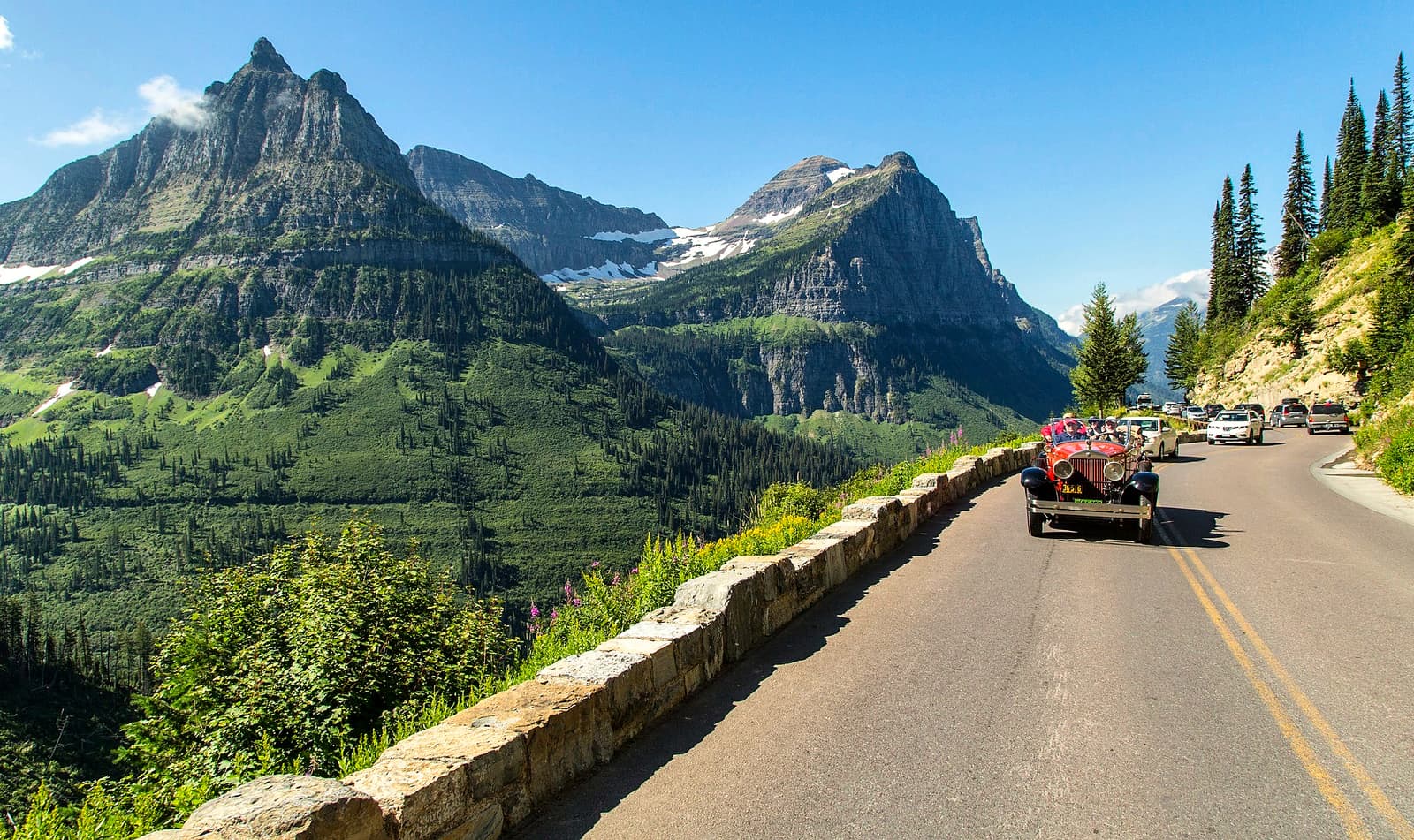
Table of Contents
For the first time in five years, you can drive into Glacier National Park without a reservation. No timed entry for Going-to-the-Sun Road, no booking window for Many Glacier, nothing for Two Medicine or the North Fork. What replaced the old system is a new shuttle and a parking rule that will catch thousands of visitors off guard this summer — and almost no guide online has the details right yet.
2026: The Biggest Access Change in Years
Vehicle reservations are gone — everywhere. Per the February 18, 2026 NPS announcement, no reservation is required anywhere in the park in 2026: Going-to-the-Sun Road, Many Glacier, Two Medicine, or the North Fork. You drive in with a valid pass. What replaced the old system is a two-part setup aimed directly at the Logan Pass bottleneck.
The new ticketed express shuttle runs July 1 through September 7, 2026, costs $1 per person (Recreation.gov processing fee), and is required for every passenger ages 2 and up. It's express only — West side: Apgar Visitor Center or Lake McDonald Lodge direct to Logan Pass (no Avalanche stop; afternoon stops at The Loop for Highline hikers). East side: St. Mary Visitor Center or Rising Sun direct to Logan Pass. This replaces the old free hop-on/hop-off system entirely, and shuttles will not pick up passengers without tickets.
How ticket booking actually works:
A portion of tickets released on a 60-day rolling window starting May 2, 2026 at 8:00am MDT
The majority of tickets release at 7:00pm MDT the night before, starting June 30. NPS deliberately weighted the release this way — in past years, advance bookings were often no-shows, while night-before bookings were almost always used. The practical takeaway: don't panic if the 60-day window sells out. Most of the inventory drops at 7pm the evening before.
Maximum 10 tickets per person per day; tickets are non-transferable and photo ID may be requested
Book on Recreation.gov or by phone at 877-444-6777
A realistic warning: tickets go fast. Reports from travelers this season describe shuttle spots filling within seconds to minutes of release. Treat it like a permit lottery — be logged into Recreation.gov with payment saved before 8:00am MDT (advance) or 7:00pm MDT (next-day), refresh at the top of the minute, and book immediately. The 7pm next-day release is your best odds since that's where most inventory lives.
The 3-hour parking limit at Logan Pass, effective July 1, is the rule that will catch people off guard. The NPS says three hours covers Hidden Lake Overlook plus the visitor center — and that's accurate. What it doesn't cover: Highline Trail runs 7.6 miles one-way to Granite Park Chalet and takes 6–8 hours round trip, double the parking window. If you're hiking Highline from Logan Pass, you need the shuttle. The limit applies around the clock, so night photography at Logan Pass requires planning too.
Flying in? Check your July dates. Glacier Park International Airport (FCA/Kalispell) has a runway rehabilitation project running four consecutive weeks in July 2026: the runway closes Monday 6:00pm through Friday 10:00am each week, reopening for weekend travel (Friday–Monday). If your dates fall midweek in July, book a weekend arrival or use Missoula (MSO, ~2.5 hrs) or Great Falls (GTF, ~3.5 hrs) as alternates. Many Glacier, meanwhile, is fully reopened for 2026 after 2025 construction.
📋 Park hours, entrance fees, live alerts, campground bookings, and trail maps are all on the TrailVerse park page — this guide covers the strategy.
Why Glacier Is Worth It
Going-to-the-Sun Road is a 50-mile National Historic Landmark carved directly into cliffs above the Continental Divide — 12 of those miles cut into sheer rock faces using 500,000 lbs of explosives during construction. There's nothing else like it in any national park in the country, and driving it is an experience in itself before you've hiked a single trail.
Glacier has one of the highest grizzly bear densities in the lower 48 — roughly 30 per 1,000 km². Despite that, there's no documented bear attack on a group of four or more people in the park's history. That's not an invitation to be complacent; it's a reason to hike in groups and carry bear spray.
The geology here is genuinely prehistoric. The park's rocks are 1.6 billion years old — Precambrian sedimentary formations that still preserve raindrop impressions, mud cracks, and stromatolites, some of Earth's earliest life forms. The Lewis Overthrust pushed those ancient rocks 50+ miles eastward, placing billion-year-old stone on top of rock that's a billion years younger.
Most visitors never leave the GTSR corridor. The east side — Many Glacier, Two Medicine, Belly River — and the North Fork (Bowman Lake, Polebridge) are effectively different parks with different ecosystems, different wildlife density, and a fraction of the crowds. Glacier and Canada's Waterton Lakes National Park together form the world's first transboundary international peace park, jointly a UNESCO World Heritage Site since 1932.
When to Go (And Why It Matters)
Spring (May–mid-June): Going-to-the-Sun Road opens progressively from both ends, but Logan Pass typically doesn't open until mid-June to early July — and the NPS announces it with little advance notice. Bears are emerging from hibernation and visible at lower elevations. Crowds are dramatically lower, but many gateway businesses haven't fully opened yet and some trailheads remain snowed in.
Summer peak (July–August): All major roads and trails are open, and the park is at full capacity along the GTSR corridor. The 3-hour Logan Pass parking limit makes timing your arrival critical. Afternoon thunderstorms build fast on the Continental Divide — start any exposed ridge hike by 7am and be off the ridgeline before noon. Berry season runs through August, which means peak bear activity; wildfire smoke is also possible in late August.
Fall (September–October): Many locals call September the best month in the park. All trails stay accessible through September, the larch trees (locals call them tamaracks) turn gold mid-to-late September in the Lake McDonald basin, and the Chief Mountain border crossing stays open until September 30 — that's your deadline for a Waterton loop. September crowds have grown in recent years, so "uncrowded" is relative — but it's still far quieter than July. Note the shuttle stops running September 7.
Winter (December–April): The first 11 miles of GTSR from the west entrance to Lake McDonald Lodge are plowed and open. You can drive to Lake McDonald in winter — something that's off-limits when the park is packed in summer. Snowshoeing and cross-country skiing operate out of Apgar. Off-trail travel carries serious avalanche risk.
Season | Dates | Temps | Crowd | Best For | Watch Out For |
|---|---|---|---|---|---|
Spring | May–mid-Jun | 40–70°F | Low | Wildlife, wildflowers | Logan Pass still closed, limited services |
Summer | Jul–Aug | 60–85°F | Peak | All trails open, full access | Afternoon lightning, bear season, 3-hr Logan Pass limit |
Fall | Sep–Oct | 40–65°F | Low–Moderate | Larch color, solitude | Early snow, shuttle ends Sept 7, Chief Mountain closes Sept 30 |
Winter | Nov–Apr | 20–45°F | Very Low | Snowshoeing, solitude, drive Lake McDonald | Most roads/facilities closed |
The Trails Worth Knowing About
Highline Trail starts at Logan Pass and traverses the Garden Wall ridge for 7.6 miles to Granite Park Chalet. The views of the Livingston Range and the glacier-carved valleys below are genuinely unlike anything you've seen elsewhere, and mountain goats frequently appear right on the trail. The 3-hour parking limit means you need the shuttle for the full route — take it to Logan Pass, hike to Granite Park, descend the 4 miles to The Loop, and catch the afternoon shuttle back. That loop is exactly what the new shuttle's PM stops at The Loop are designed for. The first section past the trailhead has a narrow ledge with an assist cable, so it's not the place to discover you're afraid of heights.
Grinnell Glacier Trail in the Many Glacier valley is the most rewarding hike to an actual glacier in the park — 10.6 miles round trip through meadows, past two lakes, and up to the remnant ice at 6,524 ft. This is where you'll see Glacier's documented retreat most clearly: the park's glaciers have lost roughly 39% of their area on average since 1966. Go in late August when snowfields have melted enough to expose the true blue glacial ice. Many Glacier is fully reopened for 2026, and bears are frequent in this valley — hike in groups of four or more.
Hidden Lake Overlook from Logan Pass is 2.7 miles round trip and most people underestimate it. You're starting at 6,646 ft, and the trail gains another 500 ft across an alpine meadow where mountain goats often wander right onto the path. The Hidden Lake view is genuinely jaw-dropping. This is the hike the 3-hour parking window was designed around — it fits comfortably with time for the visitor center.
Scenic Point Trail in Two Medicine Valley makes the case for the east side. It's a 7.4-mile round trip that climbs above treeline to one of the widest views in the park — the Two Medicine valley below, the prairie stretching east into Blackfeet Nation land, peaks visible in every direction. You'll share it with a fraction of the people on Highline. Two Medicine carries deep cultural significance to the Blackfeet Nation; this is the east-of-divide heartland of their traditional territory.
What Most People Get Wrong
Most guides treat the GTSR corridor as the whole park. The east side — Many Glacier, Two Medicine, Belly River — and the North Fork (Bowman Lake, Polebridge) are entirely different ecosystems with different wildlife, different light, and far fewer people. If you enter from the west and leave from the west, you've only seen part of one park.
Water — not bears — is the leading cause of death in Glacier. Glacial meltwater streams look manageable and are not. Avalanche Creek has its own dedicated NPS safety advisory. River levels can double between morning and afternoon as temperatures rise and accelerate snowmelt — what you crossed safely at 8am can be dangerous by 2pm.
The Waterton loop is a 2–3 day extension almost no one plans for. Cross into Canada via Chief Mountain Highway (seasonal, closes September 30), take in the Prince of Wales Hotel above Waterton townsite, and you've added a genuine international experience to a domestic park trip. You need a valid passport, and that September 30 crossing deadline is a hard stop.
The Night Sky
Glacier and Canada's Waterton Lakes National Park together form the world's first transboundary International Dark Sky Park. On clear nights at Bowman Lake or in the North Fork, the Bortle scale rating reaches 1–2 — some of the darkest sky in the continental United States. Aurora borealis is a real possibility at Glacier's latitude, with solar activity still elevated near the Solar Cycle 25 maximum.
🌌 The Glacier Astrophotography Guide — Bortle class, Nikon Z6II settings, Milky Way calendar, aurora forecasting, and best shooting locations — publishes soon. Subscribe to get it in your inbox.
Getting There & Base Camp
Whitefish, MT (pop. ~8,000) is the regional hub, sitting 25 miles from the west entrance. Glacier Park International Airport (FCA) in Kalispell is 15 miles south of Whitefish — but remember the July 2026 runway closures (Monday 6pm–Friday 10am, four weeks): book weekend flights or use Missoula (MSO) or Great Falls (GTF) as alternates for midweek July arrivals.
Amtrak's Empire Builder stops directly in Whitefish — a legitimate car-free option that most visitors completely overlook, and in July 2026 it's also your most reliable midweek arrival. From Seattle or Chicago, you arrive at the doorstep of the park without renting a car. Pair it with the new express shuttle system and you don't need a vehicle inside the park at all.
Drive times matter on this trip. Whitefish to Apgar (west entrance) is about 35 minutes; the west-to-east crossing via GTSR is 50 miles but allow 2–3 hours — Going-to-the-Sun Road is not a fast road. Cell service is unreliable inside the park, so download your shuttle tickets, offline maps, and weather forecasts before you enter.
Gear for This Park
Counter Assault Bear Spray — Glacier has one of the highest grizzly densities in the lower 48, and bear spray only works if it's immediately accessible. Carry it in a hip or chest holster, never buried in your pack. TSA prohibits flying with it — buy ahead for road trips, or rent canisters in West Glacier or Apgar if you're flying in.
Columbia Watertight II rain jacket — temperature at Logan Pass can drop from 70°F to near-freezing in under 30 minutes during an afternoon storm. This happens in July, not just October, and exposed ridgeline hikes like Highline give you nowhere to shelter. The Watertight II's Omni-Tech waterproof-breathable shell packs into its own pocket, weighs almost nothing in your daypack, and matches the Columbia layers from your other park kits. Wear it over a synthetic mid-layer and you're covered for everything the Divide throws at you.
Kahtoola MICROspikes — high-elevation trails like Highline and Grinnell Glacier hold snow through June and into July most years. If you're visiting before mid-July, microspikes aren't optional on those routes — you'll see people sliding off snow slopes on the wrong footwear and wishing they'd packed a set. They strap over trail shoes in 30 seconds.
Gaia GPS — cell service dies inside the park, and that includes the areas where trails get confusing. Download your specific routes before you leave your hotel in Whitefish. Gaia's topographic detail matters for the North Fork, where signage is minimal and trails see little traffic.
Black Diamond Trail trekking poles — the unbridged stream crossings on North Fork trails and the cable-assist sections on exposed ridges both get significantly safer with poles. They also take load off your knees on the long descent back from Grinnell Glacier. The collapsible design packs down so they're not a hassle on the shuttle.
Frequently Asked Questions
Do I need a vehicle reservation to drive into Glacier National Park in 2026?
No — the NPS eliminated vehicle reservations park-wide for 2026. That applies to Going-to-the-Sun Road, Many Glacier, Two Medicine, and the North Fork. What changed is Logan Pass: there's now a 3-hour parking limit (effective July 1) and a new $1 ticketed express shuttle replacing the old free hop-on/hop-off system.
How do I get Glacier shuttle tickets in 2026?
Book on Recreation.gov or by phone (877-444-6777). A portion of tickets release on a 60-day rolling window starting May 2 at 8am MDT; the majority release at 7pm MDT the night before, starting June 30. Tickets cost $1 per person, are required for ages 2+, max 10 per day, and are non-transferable. They sell out within minutes of release — be logged in with payment saved before the release time, and target the 7pm next-day drop where most inventory lives.
What's the best time to visit Glacier National Park?
September is the local's choice — trails are fully open, larch trees turn gold mid-month, and the crowds are dramatically thinner than July. If you want everything open at once and can tolerate peak season, aim for mid-July through early August. Avoid showing up in early June expecting Logan Pass to be open; the timing is weather-dependent and unpredictable.
How many days do you need at Glacier?
Four to five days is the minimum to experience the GTSR corridor, Many Glacier, and at least one Two Medicine hike without feeling rushed. Add two to three more days for the Waterton loop across the Canadian border — the Chief Mountain crossing closes September 30. A full week lets you actually slow down and absorb the park.
Are bears dangerous at Glacier National Park?
Glacier has one of the highest grizzly densities in the lower 48, so bears are a real and frequent presence — not a background footnote. Carry bear spray in an accessible holster, hike in groups of four or more, make noise on trails, and don't hike at dawn or dusk in berry-dense areas in August. There's no documented bear attack on a group of four or more in the park's history; the risk is real but manageable with the right habits.
🗺️ Planning your trip? TrailVerse's AI trip planner builds custom itineraries based on your dates, interests, and pace.
➡️ Comparing Glacier with Yellowstone or Grand Teton? Use the Compare National Parks tool to weigh fees, parking, and amenities side by side before you commit.
Keep reading
More on this topic from TrailVerse