Grand Canyon 2026: North Rim Reopens, Permits & Best Seasons
Grand Canyon's North Rim reopened in 2026 after the Dragon Bravo Fire destroyed the historic lodge — but with no lodging, water, or visitor center. Plus a Black Bridge closure that reroutes rim-to-rim hikers, when to go, the trails that matter, and the hyponatremia risk most hikers miss.
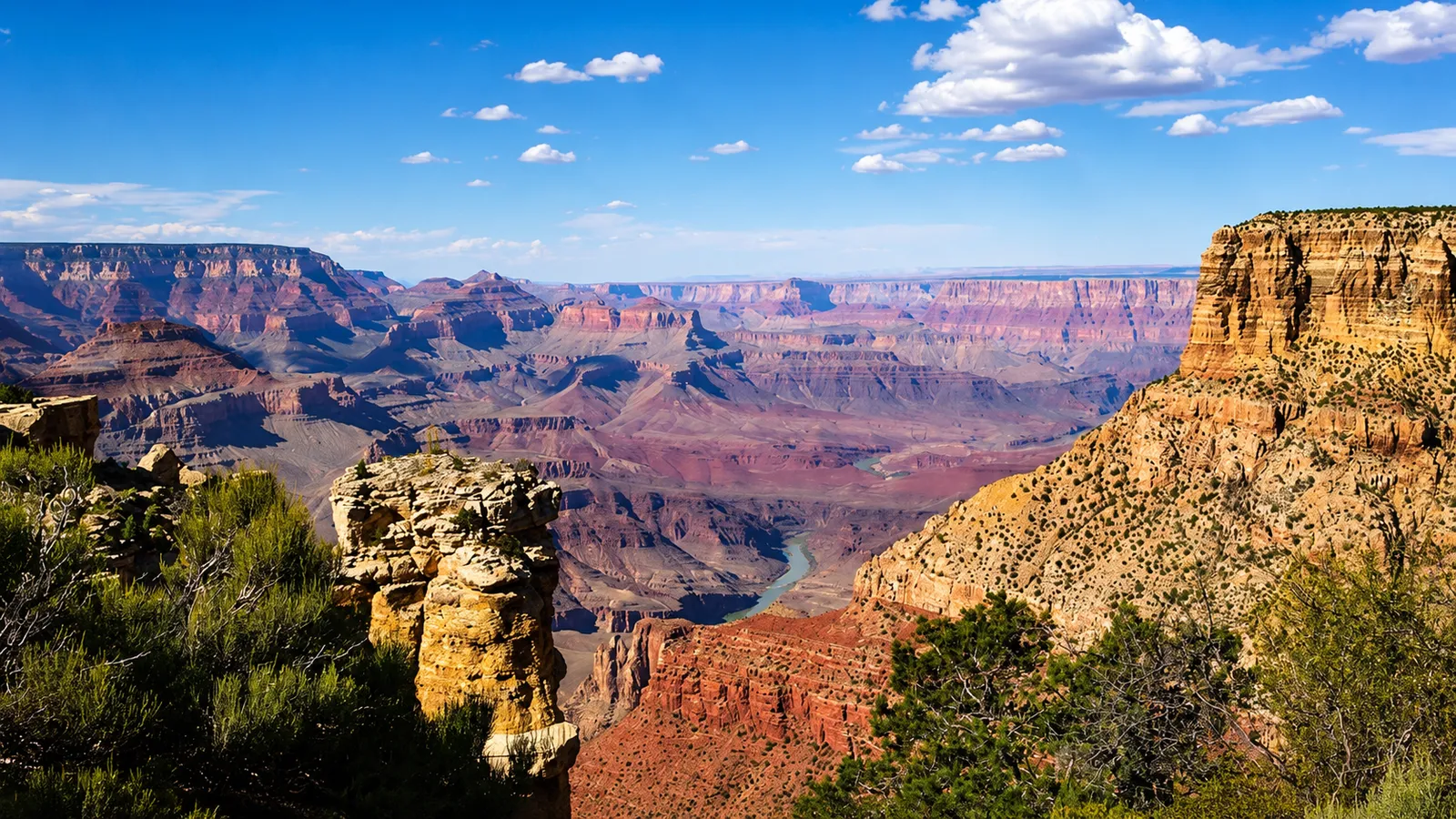
Table of Contents
Something happened at the Grand Canyon in 2025 that changes how you plan a trip in 2026: a wildfire tore through the North Rim and took the historic lodge with it. The rim is open again, but stripped down — and the South Rim has its own construction headaches this year. Here's what's actually open, when to go, and how to plan around all of it.
2026: The North Rim Reopened — But It's Not What You Remember
The Grand Canyon Lodge is gone. The Dragon Bravo Fire started from a lightning strike on July 4, 2025, and burned about 145,500 acres before it was contained at the end of September. It took 103 buildings on the North Rim with it — including the Grand Canyon Lodge, a National Historic Landmark, plus the visitor center and dozens of cabins.
The North Rim reopened on May 15, 2026. All the paved roads and the big viewpoints are back — Cape Royal, Point Imperial, Roosevelt Point, Walhalla Overlook — and the full North Kaibab Trail is open to hikers again. What's not back is everything that used to make the North Rim a place you could stay: there's no lodging, no restaurant, no visitor center, and no drinking water anywhere on the rim. You have to carry every drop you'll need, including at the trailheads.
The one practical relief: Aramark's North Rim General Store and gas station are open, and Kaibab Lodge (just outside the park on Highway 67) is running. So you can get fuel and basics nearby — you just can't base yourself on the rim itself. Plan to stay at Jacob Lake Inn (about 45 miles north) or in Kanab, Utah (about 80 miles north) and treat the North Rim as a day trip. The Lodge site sits inside a closed area, and the Park Service is still deciding whether and how to rebuild.
If you're planning a rim-to-rim or a Phantom Ranch trip, read this part carefully. Black Bridge is the only way across the Colorado River through June 30, 2026. The Silver Bridge and part of the River Trail are closed for waterline construction, so the Bright Angel Trail only runs as far as Pipe Creek Beach — you can't reach Phantom Ranch by the River Trail until July. Until then, the only link between Bright Angel and South Kaibab is the Tonto Trail, which the Park Service warns is brutally hot and exposed in summer. Don't improvise that one.
📋 Park hours, entrance fees, live alerts, campground bookings, and trail maps are all on the TrailVerse Grand Canyon park page — this guide covers the strategy.
Why the Grand Canyon Hits Different
You can read every statistic about the Grand Canyon and still not be ready for it. The single fact that lands hardest in person: the rock at the bottom, the Vishnu Basement Rocks, is 1.8 billion years old — the oldest exposed rock in North America — while the river that carved down to it only got started 5 to 6 million years ago. You're looking at a young river cutting through some of the oldest stone on the continent.
The other thing that surprises people is the depth. The South Rim sits at 7,000 feet; the river is at 2,400. That 4,600-foot drop is why hiking down feels effortless and hiking back out can put you in a Park Service rescue report. Most visitors never go below the rim at all — and honestly, the rim views alone are worth the trip. But if you do go down, the canyon plays by different rules than any hike you've done before.
Keep an eye on the sky while you're up top, too: California condors, with nine-foot wingspans, ride the thermals right over the South Rim viewpoints. They're one of the rarest birds in North America, and seeing one here is a real possibility, not a long shot.
When to Go (And Why It Matters)
For the rim, almost any season works. For hiking below the rim, the season is the whole ballgame.
Spring and fall are the right time to go into the canyon. Summer on the rim is fine, but down below it becomes genuinely dangerous — shade temperatures at Phantom Ranch average 104°F in July, and in full sun they climb to 120–125°F. That's not "uncomfortable," it's the kind of heat that lands people in the hospital. In 2025 alone, the park ran 232 search-and-rescue missions, took 848 EMS calls, and recorded 11 deaths — most of them heat-related, most below the rim. If you're hiking down, go in spring or fall.
One more summer hazard worth knowing: the monsoon season runs July through September, bringing sudden afternoon thunderstorms. They cool things off, but they also trigger flash floods in side canyons and put dangerous lightning on the exposed rim — if storms are building, get off the points and out of narrow drainages.
Season | Dates | South Rim Temp | Crowds | Best For | Watch Out For |
|---|---|---|---|---|---|
Winter | Dec–Feb | 40s–50s°F | Very low | Solitude, photography | Icy trails, shorter days |
Spring | Mar–May | 50s–70s°F | Moderate–High | Inner canyon hiking | Permits sell out fast |
Summer | Jun–Sep | 70s–80s°F | Peak | Rim walks, star party | Inner canyon 104°F+, monsoons |
Fall | Sep–Oct | 60s–75°F | Moderate | Hiking, fall foliage | Inner canyon still 95°F in Sept |
The North Rim runs mid-May through mid-November in a normal year, and opened May 15 in 2026. Just remember it's a day trip this year — no lodging, and you bring your own water.
The Trails Worth Knowing About
Bright Angel is the trail for most people — and the one that generates the most rescues. It has seasonal water at the rest houses and some shade, but "some shade" means 100°F instead of 110°F. The trap is simple: the walk down feels easy in the cool morning, and then you climb back up in the afternoon heat with tired legs. Pick your turnaround point before you start — the 1.5-mile rest house if you're casual, the 3-mile if you're fit — and actually turn around when you get there.
South Kaibab has the best views in the park and the worst conditions in summer. No water, no shade, 6.7 miles to the river. The Park Service flat-out tells people not to climb it in summer. Use it for a pre-dawn out-and-back to Cedar Ridge (1.5 miles, turn around by 10 a.m.) — not as your way back up between May and September.
The Rim Trail is the most underrated thing in the park. Thirteen miles along the South Rim, linking every major viewpoint, with a free shuttle that means you can walk a little or a lot and ride the rest. No heat danger, no permits, no climbing — just the canyon changing color through the day and condors overhead. For a lot of visitors, this is the trip.
Havasupai is its own expedition. The famous turquoise waterfalls are on Havasupai Tribe land next to the park; it's a 10-mile hike each way, and you have to stay overnight (day hiking isn't allowed). It's a dedicated multi-day trip with its own permit system — not something you tack onto a South Rim visit.
The South Rim Viewpoints Worth Your Time
If you're staying on the rim — and most people do — a few viewpoints stand out from the rest. Mather Point is the classic first look, right by the main visitor center, and it's busy for a reason. Yavapai Point, a short walk west, has a geology museum and arguably a better wide-angle view of the canyon. Hopi Point, out on Hermit Road (shuttle-only most of the year), is the sunset spot — it juts far enough into the canyon to catch light on both sides. And Desert View, 25 miles east of the village, has the historic Watchtower and the best look at the Colorado River bending through the canyon below. The free shuttle connects most of these; Desert View needs a car.
What Most People Get Wrong
The biggest killer here isn't running out of water — it's drinking too much of it. It's called hyponatremia, and most hikers have never heard of it. When you sweat hard and replace it with plain water only, your blood sodium drops too low. The frustrating part: it looks exactly like heat exhaustion, so people respond by drinking more water and make it worse. The warning sign is needing to pee constantly while still feeling sick and weak. The fix is to stop drinking plain water, eat something salty, and rest. This is the entire reason to carry electrolyte tablets — every one you drop in your water is insurance against this.
And the heat works backwards from what your body expects. It's hotter at the bottom of the canyon than the top, and the rock walls bounce it right back at you. Going down feels great. Coming up happens in full sun when you're already tired. The Park Service says it plainly: help may not reach you quickly, and you're expected to get yourself out.
The Night Sky
The Grand Canyon is a Bortle Class 2 site — among the darkest skies in the continental US — and has been a certified International Dark Sky Park since June 2019. The big annual event is the Grand Canyon Star Party every June, when astronomers set up telescopes along the rim for free public viewing. The 2026 edition ran June 6–13 on the South Rim. (The North Rim Star Party was cancelled because of the Dragon Bravo Fire.) Check the NPS page for next year's dates.
🌌 The Grand Canyon Astrophotography Guide — Bortle class, Nikon Z6II settings, Milky Way calendar, and best shooting locations — publishes soon. Subscribe to get it in your inbox.
Getting There & Base Camp
For the South Rim, your gateway options are Williams (60 miles, about an hour), Flagstaff (80 miles, about 90 minutes), or Las Vegas (280 miles, about 4.5 hours). Flagstaff is the best base — full services, gear shops, and a 7,000-foot elevation that keeps summer nights cool. If you'd rather skip the parking scramble, the Grand Canyon Railway runs from Williams straight to the Village.
For the North Rim in 2026, there's no lodging on the rim, so base at Jacob Lake Inn (about an hour north) or Kanab, Utah (about two hours). The General Store and gas station are open, but the rim has no drinking water this season — fill up before you go and bring more than you think you'll need.
Gear for This Park
CamelBak hydration pack (3L) — South Kaibab has no water for 6.7 miles, Bright Angel's rest-house taps are seasonal and can fail when the waterline breaks, and the North Rim has no water at all in 2026. Start full, carry more than feels necessary, and always pack a backup way to treat water.
Electrolyte tablets — this is your defense against the hyponatremia problem above. Drop one in every other liter. In canyon heat, plain water alone at the volume you'll be drinking is exactly what causes the trouble.
Sun hoody (UPF 50+) — there's no shade on South Kaibab from the trailhead to the river. A light hooded sun shirt blocks the UV while letting sweat evaporate, which keeps you cooler than bare skin and saves you from reapplying sunscreen all day.
Black Diamond Trail trekking poles — 4,600 feet of descent is hard on your knees going down and your legs coming up. Poles take the load off both directions, and the collapsible pair packs away once you're back on flat ground.
Permit alerts (free): corridor backcountry permits open on Recreation.gov on the 1st of the month, four months ahead, and the good sites go within hours. Set a midnight alarm and have your group's details ready — that's how people actually get dates.
Frequently Asked Questions
What's the best time to visit Grand Canyon?
Spring (March–May) is the sweet spot — April averages an 81°F shade high at Phantom Ranch and the crowds haven't peaked yet. Fall (September–October) is a close second. Summer is fine for rim views but dangerous below the rim, and winter is the quietest, most underrated season if you're mainly there for the views and photography.
How is the North Rim different from the South Rim in 2026?
The North Rim is 1,000 feet higher, cooler, greener, and normally sees only about 10% of the park's crowds. But in 2026, after the Dragon Bravo Fire, it has no lodging, no visitor center, and no drinking water — the Grand Canyon Lodge burned down and won't be rebuilt for years. The roads and viewpoints reopened May 15, so treat it as a self-sufficient day trip from Jacob Lake, not an overnight.
How do you get a Havasupai Falls permit in 2026?
The Havasupai Tribe dropped its old lottery and transfer board for 2026. Permits now sell directly through havasupaireservations.com as fixed 3-night, 4-day stays. A paid early-access window ran January 21–31 (an extra $40 per person), and standard sales opened February 1. They sell out fast, so if you missed the on-sale, watch the cancellations list on the official site — dates open up there, especially 90+ days out when refunds kick in.
How do you get a backcountry permit inside the park?
Corridor permits are on Recreation.gov, released on the 1st of the month four months before your start date. The popular sites — Bright Angel Campground, the Phantom Ranch area — go within hours, so set a midnight alert and have your group info ready. November and March have noticeably better odds.
How long do you need at Grand Canyon?
One day covers the South Rim viewpoints and the Rim Trail. Two days lets you add a pre-dawn Bright Angel descent to the 3-mile rest house and back (no permit needed). For Phantom Ranch, a rim-to-rim, or seeing both rims, plan on three days minimum.
🗺️ Planning your trip? TrailVerse's AI trip planner builds custom itineraries based on your dates, interests, and pace. Plan a Grand Canyon trip →
➡️ Pairing it with Zion or Bryce on a Southwest road trip? Use the Compare National Parks tool to weigh fees, drive times, and seasons side by side before you commit.
Keep reading
More on this topic from TrailVerse