Is the America the Beautiful Pass Worth It? (2026 Math)
America the Beautiful Pass break-even math for 2026: when $80 pays off, family rules, senior options, and when you should skip the annual pass.
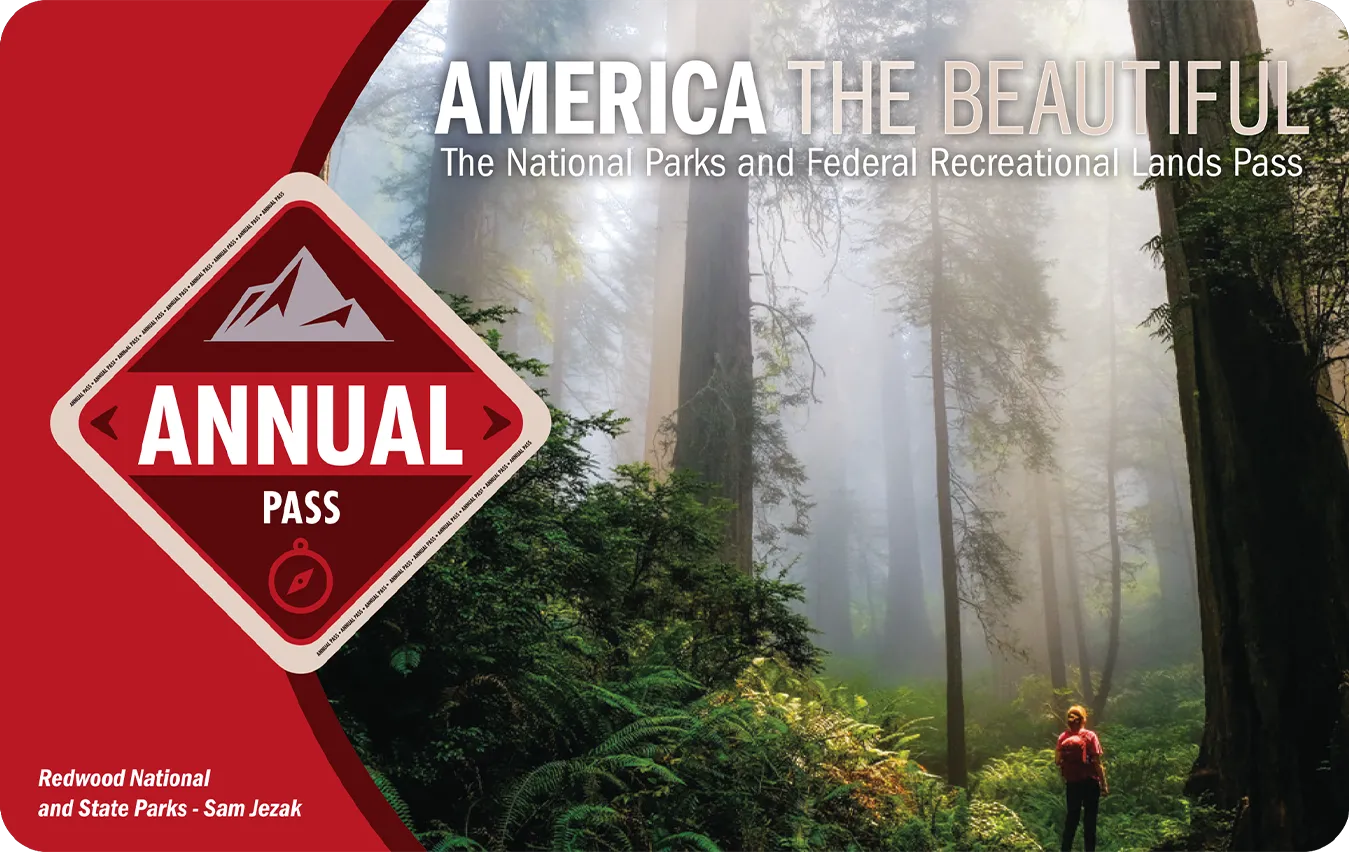
Table of Contents
You're planning your first national park trip. You Google the entry fee. It's $35. Then you see this thing called an "Annual Pass" for $80. Your brain does the math: "That's like... 2.3 parks? Do I even want to visit that many?"
Here's the actual answer: If you visit 3 or more parks in a year, the pass pays for itself. But the real question isn't just math—it's whether it changes how you travel. Let me break down the numbers, then tell you when it's absolutely worth it and when you should skip it.
The Quick Math (America the Beautiful Pass)
Cost: $80 for 12 months from purchase date
What it covers:
- Entry to all national parks (63 total)
- Entry to national forests, wildlife refuges, BLM lands
- Standard amenity and day-use fees at many USFS/BLM/FWS sites
- At per-vehicle sites: Covers everyone in one non-commercial vehicle
- At per-person sites: Covers passholder + up to 3 other adults (kids ≤15 are always free)
- Valid through the last day of the purchase month, 12 months later (buy it January 15 → expires January 31 next year)
What it doesn't cover:
- Camping fees
- Tour fees
- Permits (e.g., Angels Landing)
- Parking at some sites (e.g., Great Smoky Mountains parking tags)
- Anything operated by concessionaires
Important 2025 update: The pass has one signature line. The passholder must be present with valid ID. No sharing with friends on separate trips.
National Park Entry Fees (The Reality) — Updated for 2025
Not all parks charge the same. Here's what you're actually paying:
$35 (per vehicle, 7 days):
Grand Canyon, Yosemite, Acadia, Bryce Canyon, Grand Teton, Glacier, Rocky Mountain, Olympic, Yellowstone
$30 (per vehicle, 7 days):
Joshua Tree, Canyonlands, Shenandoah, Big Bend
$20 (per vehicle, 7 days):
Capitol Reef
Free entry (with caveats):
Great Smoky Mountains (parking tag required: $5 daily / $15 weekly / $40 annual), Redwood (some state-park day-use areas within may charge), North Cascades, Congaree, and ~15 others
Note: NPS also offers fee-free days throughout the year—check the official NPS fee-free days page for current dates.
Break-Even Math by Scenario
Scenario 1: You Visit 2 Parks
Without Pass: $70 (two $35 parks)
With Pass: $80
Verdict: Skip the pass. Save $10.
Scenario 2: You Visit 3 Parks
Without Pass: $105 (three $35 parks)
With Pass: $80
Savings: $25
Verdict: Buy the pass.
Scenario 3: Southwest Road Trip (5 Parks)
Parks: Grand Canyon, Zion, Bryce, Arches, Capitol Reef
Without Pass: $155
With Pass: $80
Savings: $75
Verdict: Absolutely buy it.
Scenario 4: Yellowstone + Grand Teton
Without Pass: $70 (separate entrance fees—$35 each park)
With Pass: $80
Verdict: Borderline. If you're also visiting nearby national forests or might add another park, buy it.
Note: Yellowstone offers its own annual pass for $70—only worth it if that's your only park all year.
Scenario 5: Year of Weekend Trips
Example: 8 parks over 12 months
Without Pass: $280
With Pass: $80
Savings: $200
Verdict: This is where it shines.
When the Pass Is ABSOLUTELY Worth It
You should buy if:
✅ You're doing a multi-park road trip — Southwest loop (5+ parks), Pacific Northwest (3+ parks), etc.
✅ You live near parks and go regularly — If you visit the same park 3+ times per year, it pays for itself
✅ You visit national forests or BLM lands — Pass covers standard amenity/day-use fees at many USFS/BLM/FWS sites beyond just national parks
✅ You're planning 2 trips in 12 months — Spring break + fall weekend = 4-5 parks total
✅ You're a spontaneous traveler — Pass removes the "Do I really want to pay $35 for a quick stop?" barrier
✅ You carpool or travel with family — Per-vehicle sites cover everyone in your vehicle; per-person sites cover you + up to 3 adults (kids ≤15 free)
When to SKIP the Pass
Don't buy if:
❌ You're only visiting 1-2 parks this year — Math doesn't work
❌ You're visiting mostly free-entry parks — Great Smoky Mountains, Redwood, etc. (though parking may cost extra)
❌ You're eligible for better alternatives — Military (free), 4th graders (free), seniors (see below)
❌ You're only going to one park repeatedly — Yellowstone locals: park-specific annual pass is $70 vs $80 interagency
❌ You can hit fee-free days — If your schedule is flexible, plan trips around NPS fee-free dates
Pass Alternatives to Consider
Senior Pass ($20 annual OR $80 lifetime)
If you're 62+, you have two options:
- $20 for one year (renewable annually)
- $80 for lifetime access
The lifetime pass is the deal of the century at 62. Buy it immediately.
Military Pass (Free)
Active military and eligible dependents get a free Annual Pass. Some veterans/Gold Star families also qualify for free entry—check the official guidelines.
4th Grade Pass (Free)
If you have a 4th grader, they get a free pass through Every Kid Outdoors. Covers their entire family.
Park-Specific Annual Pass
Some parks sell their own annual passes (e.g., Yellowstone = $70). Only makes sense if that's your only park for the year.
How to Maximize Pass Value
Strategy 1: Buy at Your First Park
Don't buy it before your trip unless you're sure. Buy it at the entrance of your first park. If plans change, you haven't wasted money.
Strategy 2: Time It Right
The pass is valid through the last day of the purchase month, 12 months later.
Buy it January 15 → expires January 31 next year.
Buy it January 31 → same expiration. Timing matters.
Strategy 3: Count National Forests and BLM Lands Too
Planning to camp in a national forest? Many charge day-use fees. The pass covers standard amenity fees at many USFS/BLM/FWS sites. Your pass value extends beyond just the 63 national parks.
Strategy 4: Use It for Spontaneous Trips
The real value isn't planned trips—it's removing the mental barrier. "Should we stop at that park?" becomes "We already have the pass, why not?"
Real-World Examples (Actual Trips)
Trip 1: Yellowstone Family Vacation (5 Days)
- Entry: $35
- Pass cost: $80
- Verdict: Skip the pass for this single trip
- But: If they also visit Grand Teton ($35), that's $70 without pass vs $80 with. Still borderline. Add national forest day-use fees and the pass can win.
Trip 2: Southwest Loop (10 Days)
- Grand Canyon: $35
- Zion: $35
- Bryce: $35
- Arches: $35
- Canyonlands: $30
- Total: $170 vs $80 pass
- Savings: $90
- Verdict: Buy the pass
Trip 3: Pacific Northwest Summer (2 Weeks)
- Olympic: $35
- Mount Rainier (NPS): $30
- Crater Lake: $30
- Redwood: Free (some nearby state-park day-use fees may apply)
- Total: $95+ vs $80 pass
- Savings: $15+
- Verdict: Buy the pass (modest savings, big flexibility for spontaneous USFS/BLM stops)
Trip 4: Weekend Warriors (Year-Long)
- January: Joshua Tree
- March: Death Valley
- May: Yosemite
- July: Sequoia
- September: Grand Canyon
- November: Saguaro
- Total: $200+ vs $80
- Savings: $120+
- Verdict: Absolutely buy the pass
Common Questions (Honest Answers)
Can I share it with my friend on separate trips?
No. Since late 2023/2024 updates, the pass has one signature line and the passholder must be present with valid ID.
Does it cover parking?
Usually, but not always. Most national park parking is included with entry. Great Smoky Mountains requires a separate parking tag ($5 daily / $15 weekly / $40 annual). Some popular trailheads and adjacent state parks may charge separate fees not covered by the pass.
Can I buy it online?
Yes—via the USGS store—but buying at a park entrance is easy and ensures you'll actually use it.
What if I lose it?
You'll need to buy a new one. No replacements for lost or stolen passes. Take a photo of it when you get it as a reference.
Does it expire exactly 12 months later?
It expires on the last day of the purchase month, 12 months later (e.g., buy Nov 10, 2025 → valid through Nov 30, 2026). Strategic timing matters.
Does it cover everyone in my group?
Depends on the site:
- Per-vehicle sites: Covers everyone in one non-commercial vehicle
- Per-person sites: Covers passholder + up to 3 other adults (kids ≤15 always free)
The Psychology Factor (Underrated)
Here's what nobody tells you: The pass changes your behavior.
Without the pass: "Should we stop at this park? It's $35... we weren't planning on it... let's skip it."
With the pass: "We already paid for it—why not stop?"
I've visited at least 10 parks I wouldn't have visited without the pass—not because I couldn't afford entry, but because the pass removed the decision friction. Some of those "spontaneous" parks became favorites.
The pass encourages exploration. That's worth something beyond just math.
Should YOU Buy It? (Decision Tree)
Visiting 3+ parks this year? → Yes: Buy the pass
Visiting 2 parks + national forests/BLM fees? → Yes: Buy the pass
Visiting 1-2 parks but might add spontaneous stops? → Consider buying
Are you 62+? → Buy the $80 lifetime Senior Pass (or $20 annual if testing it out)
Military or 4th grader? → Get the free pass
Can you plan around fee-free days? → Use fee-free days and skip the pass
The Thanksgiving Timing Opportunity
Here's something most people miss: Right now is the perfect time to buy the pass.
Thanksgiving weekend is coming up. Maybe you're visiting a park during the holiday (Death Valley? Grand Canyon? Saguaro?). Or maybe you're planning a Christmas getaway or New Year's trip.
If you buy the pass in November 2025:
- It's valid through November 30, 2026
- That's Thanksgiving 2025 → Thanksgiving 2026
- Effectively covers two holiday seasons and a full summer in between
The play:
- Use it for Thanksgiving weekend trip
- Use it for Christmas or New Year's getaway
- Use it for spring break 2026
- Use it for summer 2026
- Use it for fall 2026
- Still valid for Thanksgiving 2026
Even if you're only visiting one park this trip, you've got 12+ months to hit 2-3 more and break even.
Bottom Line
The National Park Annual Pass is worth it if you visit 3+ parks in 12 months. At $80, it pays for itself quickly on multi-park road trips and removes the friction of spontaneous visits.
Skip it if you're only visiting 1-2 parks, unless you're also hitting national forests or likely to add spontaneous stops.
My take: If you're even considering it, you're probably the type who'll use it. The pass doesn't just save money—it changes how you travel. And that's worth more than the $25 you "save on paper."
Buying in November? You get coverage through the end of next November—two holiday seasons, a summer, and lots of chances to let this pass pay for itself.
62 or older? Get the $80 lifetime. It's the best deal in outdoor recreation.
Ready to buy? Pick it up at your first park entrance, or order online at the USGS store. Then start planning those park trips.
Keep reading
More on this topic from TrailVerse