July 4, 2026 National Parks Guide: Fee-Free Days, Crowds & Wildfire Alerts
America turns 250 and national parks are fee-free July 3–5 — landing in the middle of a severe Western wildfire emergency. How to beat the record crowds, what Utah's fire and fireworks bans mean for your trip, which parks still need reservations, and the best days to actually go.
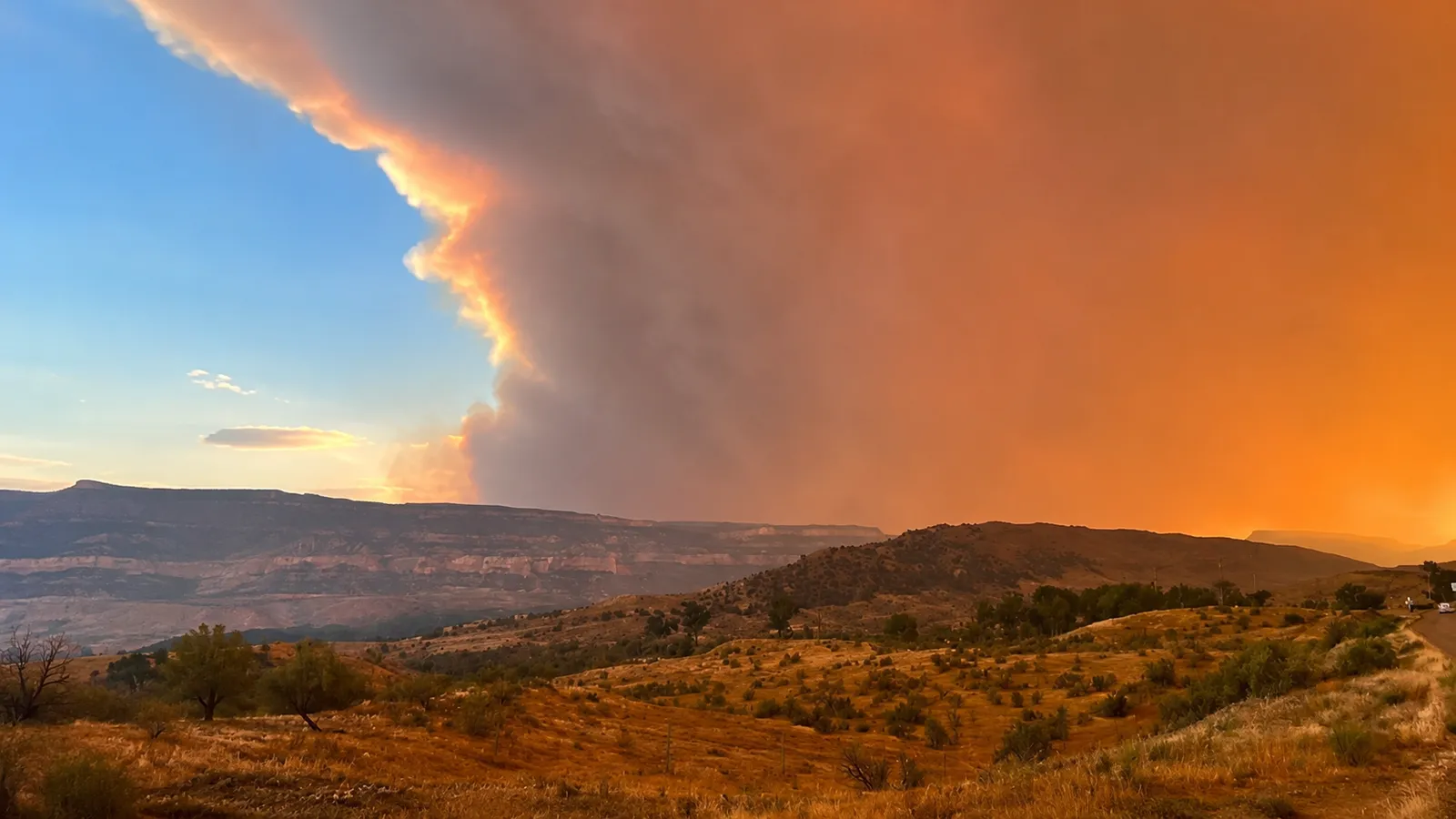
Table of Contents
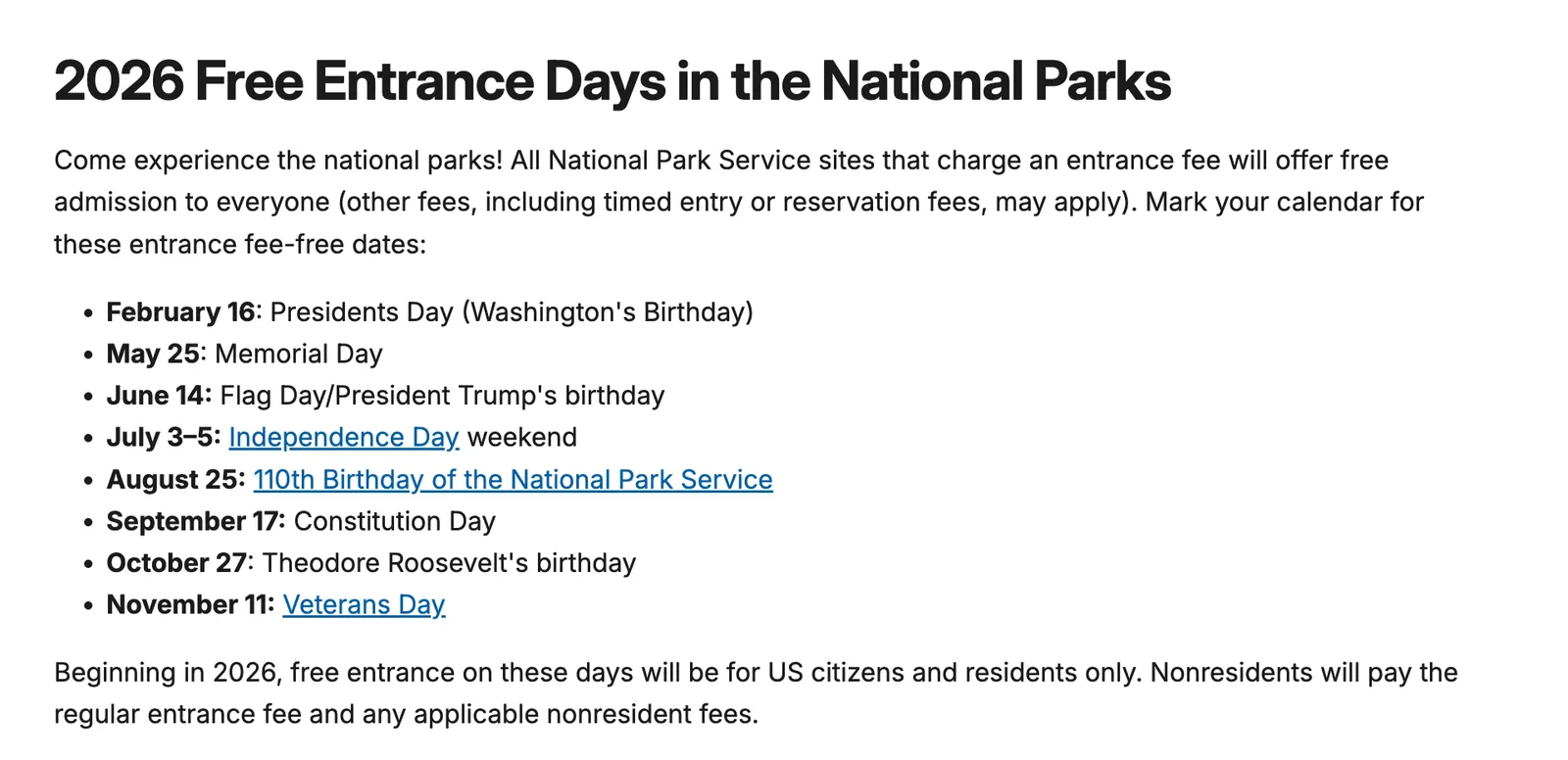
America turns 250 on July 4, 2026, and national parks are free to enter July 3 through 5. That's the biggest Independence Day milestone since the 1976 Bicentennial, landing on a Saturday, with free entry — a combination that will make this the busiest park weekend in years.
It's also landing in the middle of a deadly Western fire emergency. Three firefighters were killed on the Colorado–Utah border this week as crews battled fast-moving blazes across the region. Both Utah and Colorado have declared states of emergency, Mount Rainier is under a parkwide fire ban, and conditions are changing by the hour.
Last verified: June 28, 2026. Fire and fireworks rules are changing fast this week — always confirm on the park's official NPS alerts page the night before you go.
📋 Look up your park on TrailVerse for live fees, hours, alerts, campground bookings, and trail maps. This guide covers the strategy.
At a Glance: Is Your Park Affected?
Park | Reservation Needed? | Fire Status | Crowd Outlook |
|---|---|---|---|
Arches (UT) | No — dropped for 2026 | Stage 2 restrictions | Extreme |
Zion (UT) | No | Stage 2 restrictions | Extreme |
Bryce Canyon (UT) | No | Heightened — check alerts | Extreme |
Canyonlands (UT) | No | Stage 2 restrictions | Extreme |
Capitol Reef (UT) | No | Stage 2 restrictions | High |
Grand Canyon (AZ) | No | Restrictions likely | Extreme |
Yosemite (CA) | No — dropped for 2026 | Check alerts | Extreme |
Glacier (MT) | No — dropped for 2026 | Check alerts | Extreme |
Mount Rainier (WA) | No | Parkwide fire ban | Extreme |
Rocky Mountain (CO) | Yes — timed entry | CO emergency — check alerts | High (capped) |
Acadia (ME) | Yes — Cadillac sunrise | None current | High (capped) |
Shenandoah (VA) | No (check) | None current | High |
Haleakalā (HI) | Yes — sunrise | None current | High (capped) |
Great Basin (NV) | No | Check alerts | Low |
Congaree (SC) | No | None current | Low |
Guadalupe Mtns (TX) | No | None current | Low |
Stage 2 restrictions = no open fires of any kind, including campfires and charcoal; gas stoves with a shut-off valve are still allowed. Always verify on the park's NPS alerts page the night before — conditions are changing daily this week.
Why 2026 Is Different From Every Other July 4th
This isn't just another holiday weekend. The National Park Service has been building toward America's 250th for over a year, and special events are running at parks coast to coast for the milestone. Expect ranger programs, evening celebrations, and commemorative events at many parks — check your specific park's calendar, since lineups and times are being finalized close to the date.
Here's the problem for anyone hoping to actually enjoy a park: the 250th hype, the long weekend, and free entry all hit at once. Free admission removes one of the few things that normally thins a crowd, so the parks that are busy on a regular July weekend will be overwhelmed this one. Expect every major park near a city to be at or past capacity by mid-morning all three days — and plan to arrive at dawn or skip the marquee names entirely.
Western Parks: Read This Before You Go
If you're headed to Utah, the Pacific Northwest, or the Southwest, checking park alerts the night before isn't boilerplate this year — it's essential.
Utah is in a wildfire state of emergency. Governor Spencer Cox declared a state of emergency on June 25 after one of the most severe fire seasons in state history — more than 350 wildfires so far this season, roughly three-quarters of them human-caused. As of this weekend the Iron and Cherry Fires near Eureka have burned around 70,000 acres combined, closing US-50 and forcing evacuations, while multiple large fires burn along the Colorado border. Every county in the state is in severe drought.
Stage 2 fire restrictions are in effect at Zion, Arches, Canyonlands, and Capitol Reef, plus Natural Bridges, Hovenweep, Glen Canyon, Dinosaur National Monument, and surrounding BLM, state, and Forest Service land as of June 26. Under Stage 2, all open fires are prohibited — campfires, charcoal, briquettes — and only gas stoves and lanterns with a shut-off valve are allowed, used at least three feet from anything flammable. Bryce Canyon has heightened restrictions too; check each park's page directly.
On fireworks: the rules are stricter and more local than usual. Fireworks are banned outright on all public lands — every national park, BLM tract, and national forest in Utah. Statewide, Cox's order makes "no fireworks" the default, but it lets individual cities designate specific areas where personal fireworks are still allowed. So if you're in a Utah town for the weekend, don't assume — check your specific city's rules, and never bring fireworks onto public land. And take it seriously: state officials have said they'll pursue anyone who starts a fire for the full cost of suppression — potentially millions of dollars — and that parents can be held liable if a child starts one. A single careless spark this weekend could mean criminal charges and a bill you'll never finish paying.
Mount Rainier is under a parkwide fire ban as of June 26 — all campfires prohibited everywhere in the park, including developed campgrounds, with gas stoves still allowed. Grand Canyon and other Southwest parks have their own heightened restrictions. The NPS wildfire page and each park's alerts page are your two must-check sources the evening before you visit.
Have a backup plan, and watch the smoke. Even a park with no closures can be miserable — or unhealthy — to hike in if it's downwind of an active fire. Right now smoke from Utah's fires is pushing east and northeast across the state and into Colorado, so a clear sky inland is no guarantee of clean air at the trailhead. Check AirNow.gov the morning of your hike, not just the cloud forecast, and have a scenic drive or low-effort viewpoint ready to pivot to if your primary trail closes or the air turns hazardous. Smoke and air-quality conditions can shift overnight as winds change.
Parks That Dropped Timed Entry: Expect No Mercy
Three of the country's most popular parks — Yosemite, Glacier, and Arches — ended their timed-entry and reservation systems for 2026. That means no permit buffer, no vehicle cap. First come, first served.
On July 4th weekend at these parks, "first come" means before dawn. Arches parking routinely fills before 8 a.m. on an ordinary summer weekend; on a fee-free Saturday during America's 250th, expect the lot full before sunrise. The park doesn't close, but you'll sit in a queue with no guarantee of a spot.
Your options at these parks this weekend:
Arrive very early — before 7 a.m. everywhere, before 6 a.m. at Arches and Zion
Use shuttles where they run — Zion's shuttle bypasses the parking problem entirely
Flip your day: arrive after 4 p.m. as the day crowd clears
Pick an alternative park (more below)
Note that Arches, Zion, and Canyonlands are all under fire restrictions — plan your camping around no open flames.
Parks That Still Require Reservations
A few parks kept entry or access reservations for 2026, and those don't go away on fee-free days — you still need the reservation even though entry is free.
Rocky Mountain National Park requires timed-entry reservations May 22 through October 12, in two types: one including Bear Lake Road (required 5 a.m.–6 p.m.) and one without it (required 9 a.m.–2 p.m.). Haleakalā requires a reservation for sunrise at the summit, and Acadia requires one for the Cadillac Summit Road. Carlsbad Caverns requires timed-entry tickets to enter the cave.
If you have one of these reservations, you're in far better shape than most people this weekend — these systems exist precisely because the parks can't absorb uncapped summer crowds. If you don't have one, don't show up hoping to squeeze through; the entrance points check.
Day-by-Day Strategy for the Long Weekend
Wednesday, July 1 is your best travel day for a western park. You'll beat the holiday traffic wave and have Thursday and Friday to explore before the crush. Campgrounds and trailhead lots are still reachable at reasonable hours.
Thursday, July 2 is manageable if you arrive before 8 a.m. Because July 4 falls on a Saturday, the federal holiday is observed Friday, July 3 — so many people take Thursday off too, and traffic builds through the afternoon.
Friday, July 3 is the observed federal holiday and a fee-free day. Treat it like a Saturday. Arrive early or plan a scenic drive instead of a marquee trailhead. It's a good day for a less-crowded park or a national monument.
Saturday, July 4 is the peak of the peak. If you're at a park, you're in early or you're not getting a trailhead parking spot. Afternoon thunderstorms are common in the Rockies and Southwest — watch the forecast, since lightning can close exposed trails midday. Evening ranger programs and celebrations are worth staying for.
Sunday, July 5 is still fee-free and still crowded, but the departure wave begins. If you're flexible, Sunday afternoon onward is when things ease.
Monday, July 6 is the best day of the stretch if you can swing it. Fee-free days are over, which thins the casual-visitor surge — quieter trails, more campground openings. If your schedule has any give, extend to Monday.
Smart Alternatives to the Big Names
If the crowded majors don't appeal this weekend, these deliver a lot with a fraction of the traffic:
Great Basin National Park (Nevada) — Nevada's only national park and one of the darkest skies in the country. Lehman Caves, Wheeler Peak, ancient bristlecone pines, and almost nobody. Check current fire conditions before you go.
Channel Islands National Park (California) — the ferry caps daily visitors, so you'll share the trails with sea lions more than people. Book the boat in advance.
Congaree National Park (South Carolina) — old-growth bottomland forest on flat boardwalk trails, minimal crowds even on holidays. Summer heat is real; go early.
Guadalupe Mountains National Park (Texas) — the highest peak in Texas, minimal infrastructure, minimal crowds. If you're road-tripping the Southwest and want to dodge Utah traffic, this is the move.
National monuments and state parks near the popular corridors often offer near-identical scenery with a fraction of the crowd. Cedar Breaks National Monument, about 25 miles from Bryce, gives you similar red-rock amphitheater views with far fewer people — and Dead Horse Point State Park, 30 minutes from Arches, rivals anything in the area.
Traffic: The Honest Breakdown
Record holiday travel is expected this weekend. A long weekend, fee-free parks, America's 250th, and summer-peak metro populations heading outdoors add up to standstill traffic on the roads into gateway towns.
Avoid driving Friday afternoon and Saturday morning — that's when everyone's in transit. The worst windows are roughly 2–7 p.m. on July 3 and 7 a.m.–noon on July 4.
If you're already there, you win. Arriving Wednesday or Thursday evening sidesteps the peak inbound traffic entirely.
For the drive home, Sunday afternoon and Monday morning will be heavy. If you can push your return to Monday afternoon or Tuesday, you'll get home faster and calmer.
Your Pre-Trip Checklist
Check NPS alerts the evening before each day — not just once before the trip. Fire conditions, closures, and air quality can shift within 24 hours this week.
Have a backup. Every major hike should have a scenic-drive alternative ready.
Bring your own food and water. Gateway-town restaurants will have long waits; park concessions sell out by midday.
No open fires in Utah's parks or at Mount Rainier. Stage 2 restrictions and the Rainier ban prohibit all campfires and charcoal. Gas stoves with a shut-off valve are fine.
No fireworks on any public land. They're banned across all national parks, forests, and BLM land — and in Utah the statewide default is no personal fireworks, with only certain city-designated areas exempt. Check your specific city.
Bring a photo ID. Fee-free entry is U.S. residents only in 2026, and visitors 16+ may be asked to show ID.
Reservations still apply on fee-free days. Rocky Mountain (timed entry), Acadia and Haleakalā (sunrise/summit), and Carlsbad Caverns (cave tickets) all still require them.
Use shuttle systems. At Zion and Glacier (where running), shuttles bypass the parking problem entirely.
Download offline maps. Cell service vanishes fast in canyon country and alpine parks.
Frequently Asked Questions
Are national parks really free this July 4th weekend?
Yes — entrance fees are waived July 3, 4, and 5, 2026, but for U.S. residents only, with photo ID required for visitors 16 and older. Camping fees, timed-entry reservation fees, and special permits are not waived. International visitors pay the standard entrance fee, plus a $100 nonresident fee at 11 of the busiest parks.
Which parks require reservations this weekend even with free entry?
Rocky Mountain (timed entry), Acadia (Cadillac Summit Road), Haleakalā (sunrise), and Carlsbad Caverns (cave tickets) all require reservations that are separate from, and unaffected by, the fee-free days. Show up without one and you'll be turned away.
Can I have a campfire at Utah's national parks this weekend?
No. Stage 2 fire restrictions are in effect at Zion, Arches, Canyonlands, and surrounding public lands as of June 26, 2026, with Bryce Canyon under heightened restrictions. All open fires — campfires and charcoal — are prohibited. Gas stoves with a shut-off valve are allowed. Confirm your specific park's page before you go.
Can I set off fireworks for July 4th in Utah this year?
Not on public land — fireworks are banned across all national parks, national forests, and BLM land. Statewide, Governor Cox's emergency order makes "no fireworks" the default, but individual cities can designate areas where personal fireworks are still permitted. Check your specific city's rules, and never bring fireworks into a park or onto public land.
What if Arches or Zion is too crowded?
If Arches parking is full, Dead Horse Point State Park is 30 minutes away with canyon views that rival anything nearby and far smaller crowds. For Zion overflow, the Kolob Canyons section (separate entrance, 45 minutes north) sees a fraction of the main-canyon traffic.
What's the best day to visit during the long weekend?
If you can arrive Wednesday, July 1 or Thursday, July 2, you'll beat the crush entirely. Within the holiday weekend itself, Monday, July 6 is the quietest — fee-free days end July 5, which drops the casual-visitor surge sharply.
🗺️ Trying to pick a park that won't be a parking lot? TrailVerse's Compare tool weighs crowds, fees, and access side by side, and the AI trip planner builds you a route around the chaos.
Keep reading
More on this topic from TrailVerse