Yosemite 2026: Crowds, Parking & Valley Access
Reservations are gone, but crowds are not. Valley parking, entrance waits, 2026 fees, and the months that still make sense after timed entry ended.
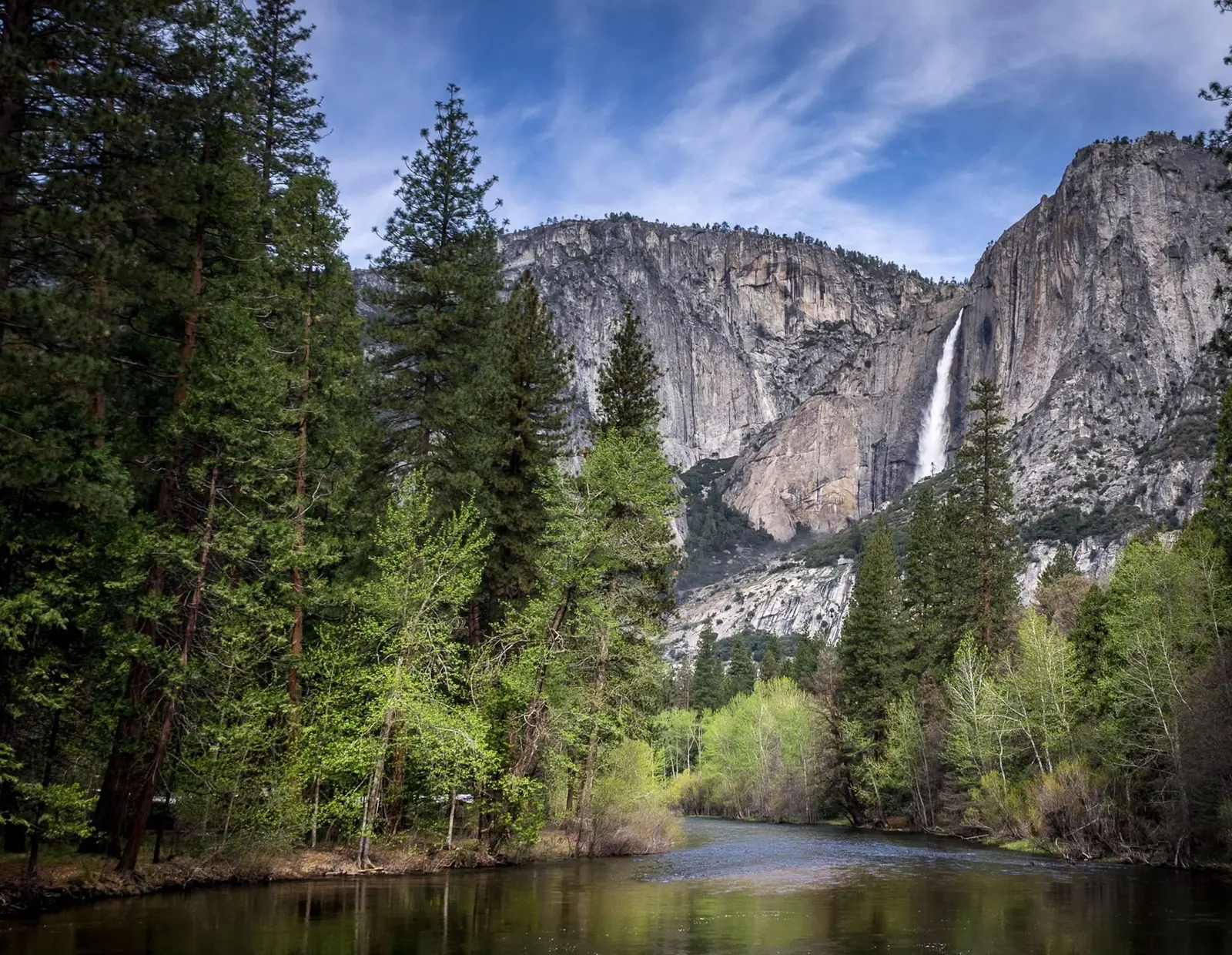
Table of Contents
Yosemite National Park's vehicle reservation system is gone in 2026 — no advance booking required to drive through any entrance. The first spring weekends proved exactly what that means: 1.5-hour entrance waits, parking lots full by 8am, and crowds that overwhelmed the park's capacity within days. The park didn't get bigger; the throttle was removed. Planning around this reality — not pretending it away — is what makes or breaks a 2026 Yosemite trip.
2026 Access Update: No Reservations, Real Crowds
Drive-up access is back — which means unmanaged summer chaos is also back. March 2026 saw 225,817 visitors, a 44.98% increase over March 2025, and the first Saturday in May filled Valley parking lots by 11am with 90-minute delays at the south entrance on Highway 41. There's no evidence summer will be different. The good news: the park has never been more accessible. The trade-off: the Valley's finite parking infrastructure hasn't changed.
The Valley Shuttle is your real solution. The free shuttle covers all major Valley trailheads and runs continuously. Park your car once — ideally at the Yosemite Valley Lodge or Curry Village areas — and ride to everything. You're not competing for individual trailhead spots, and the shuttle takes the same route you'd drive. Most visitors get themselves into a gridlock by trying to drive lot-to-lot. Don't.
Sign up for NPS text alerts. Text "YOSEMITE" to 333111 for real-time parking, traffic, and emergency updates directly from the park. This is the single most useful tool that exists for navigating crowds in 2026, and almost no one knows about it.
A non-US resident $100/person surcharge applies starting January 2026 at Yosemite and 10 other high-visitation parks — separate from the standard entrance fee. The $250 America the Beautiful Non-Resident Annual Pass waives the surcharge if you're hitting two or more designated parks.
2026-specific closures to plan around:
Tioga Road (Highway 120): Closed through Memorial Day Weekend 2026 — high country access depends on this opening
Mist Trail: Closed Monday–Thursday, 7am–3:30pm from June 30 through late October for repairs. Open Fri/Sat/Sun and holidays. Weekday hikers must start by 5am to clear the trail before closure, then descend via the John Muir Trail
John Muir Trail (Clark Point to Nevada Fall "Ice Cut" section): Closed for repairs through late June
📋 Park hours, entrance fees, live alerts, campground bookings, and trail maps are all on the TrailVerse park page — this guide covers the strategy.
Why This Park Is Worth It
Yosemite Valley is seven miles long and one mile wide — a glacially-carved granite corridor that holds the most concentrated collection of monumental rock in the world. El Capitan rises 3,000 feet from the Valley floor as a single unbroken mass; Half Dome tops 8,800 feet and has its distinctive shape because the rock's outer layers literally peeled off over millions of years. Neither of these formations exists anywhere else on this scale.
Yosemite Falls is the highest waterfall in North America at 2,425 feet — and it peaks in May and June from snowmelt before slowing to a trickle by August. Most visitors who complain about the falls came in August. Mariposa Grove holds 500 mature giant sequoias, including the Grizzly Giant — estimated at 2,400+ years old, predating the Roman Empire. And 95% of all visitors never leave the Valley, meaning the park's 1,169 square miles of high country are essentially empty.
When to Go (And Why It Matters)
May is the best month for most visitors — waterfalls at peak from snowmelt, wildflowers in the Valley meadows, and crowds below summer levels. The one constraint: Tioga Road (the highway through the high country to Tuolumne Meadows) is typically still closed until Memorial Day Weekend.
September is the best month for the experience-to-crowd ratio — summer visitors have cleared out, the weather stays warm, Half Dome cables are still up through October 13, and the light goes golden earlier. Waterfalls are reduced but the park feels like it did before the crowds found it.
Season | Dates | Temps (Valley) | Crowd | Best For | Watch Out For |
|---|---|---|---|---|---|
Spring | Apr–May | 55–70°F / 35–45°F | Low–Moderate | Peak waterfalls, wildflowers, cooler hiking | Tioga Road closed until Memorial Day; wet trails |
Summer | Jun–Aug | 80–90°F / 50–60°F | Very High | Full access; Half Dome cables open May 15 | Parking full by 8am; 250K+ visitors/month; Mist Trail weekday closures |
Fall | Sep–Oct | 65–80°F / 40–50°F | Moderate | Best crowds/experience balance; golden light | Tioga closes late Oct; Glacier Pt Rd closes mid-Nov |
Winter | Nov–Mar | 40–55°F / 25–35°F | Very Low | Near-solitude; Valley snow; dramatic light | High country inaccessible; some services closed |
The Trails Worth Knowing About
Clouds Rest is the best day hike in the park that most visitors never do — and a better alternative to Half Dome for most people. You get a more dramatic view of Half Dome than you'd have from its own summit, no permit required for day hiking, and a fraction of the foot traffic. The trailhead is on Tioga Road at Tenaya Lake; 12 miles round trip with about 1,775 feet of gain. The summit ridge is exposed — watch for afternoon lightning and be off the top by 1pm. This hike requires Tioga Road to be open.
Nevada Fall via the Mist Trail is the waterfall experience the Valley actually delivers. Vernal Fall (lower) gets all the Instagram traffic; Nevada Fall (the extension beyond it) is where the crowds thin and the scale becomes real. The Mist Trail's wet granite steps are legitimately dangerous — 14 people died at Vernal Fall between 2003 and 2013. Waterproof footwear with grip is not a suggestion. The 5.4-mile round trip to Nevada Fall is the right objective. 2026 note: The Mist Trail is closed Mon–Thu, 7am–3:30pm from June 30 through late October for repairs. Weekday hikers must start by 5am or visit on weekends/holidays when it's fully open.
Sentinel Dome is the most rewarding easy hike in the park: 2.2 miles round trip, minimal elevation, and a 360° panoramic summit that includes Half Dome, El Capitan, and the entire Valley. Accessible once Glacier Point Road opens (late May/early June). Go at golden hour for the best light — company guaranteed but the view justifies it.
Hetch Hetchy is Yosemite's most underrated destination and the best crowd-avoidance strategy in the park. The northwest corner of the park holds a valley that John Muir called Yosemite's twin — same granite walls, same waterfalls, same geological story — now flooded by a reservoir built over his fierce opposition in 1923. The road to the Hetch Hetchy trailhead adds 45 minutes from the Valley. Almost nobody makes that drive. The trails around the reservoir are essentially empty even in July, and Wapama Falls (6.2 miles round trip) is one of the most powerful spring waterfalls in the park.
What Most People Get Wrong
The Valley is only 1% of the park — and most visitors act like it's 100%. Yosemite Valley is 7 miles long. The park is 1,169 square miles. Tuolumne Meadows in the high country sits at 8,600 feet, offers better star visibility, significantly fewer crowds, and completely different terrain (alpine granite, open meadows, glacially-carved domes). You need Tioga Road to be open to get there — typically Memorial Day Weekend. If you're visiting from June through October and you skip Tuolumne, you've seen a small fraction of what Yosemite actually is.
Half Dome is a permit lottery, and the odds are brutal. The park caps the number of hikers passing the Sub Dome at 300 per day — split between 225 day-hiker permits and 75 backpacker permits. The preseason lottery (March 1–31) has overall odds around 22%, but on any specific popular July Saturday, real odds are closer to 1%. The actually achievable path: apply the daily lottery two days before, target weekday dates in September, and consider the backpacker route (wilderness permit + Half Dome add-on for $10). Weekdays in September have dramatically better odds than July weekends.
The cables came up early in 2026. Record-low snowpack opened the Half Dome cables on May 15, 2026 — earlier than the typical "Friday before Memorial Day" schedule. Plan to ascend by October 13 when they come down for the season.
The Night Sky
Yosemite's high country — Tuolumne Meadows and Glacier Point — reaches Bortle Class 2–3, legitimately dark enough to see Milky Way structure and Andromeda with the naked eye. The Valley floor sits at Bortle 4–5, but the granite walls and waterfalls as astrophotography foreground make it worth shooting anyway. The park has no IDA Dark Sky certification but the skies in the high country are real.
🌌 The Yosemite Astrophotography Guide — Bortle class by location, Nikon Z6II settings, Milky Way calendar, and best shooting spots including Glacier Point and Tuolumne Meadows — publishes Next week. Subscribe to get it in your inbox.
Getting There & Base Camp
Fresno, CA is the closest major airport (Fresno Yosemite International, FAT) — 90 minutes to the Valley via Highway 41 through the South Entrance. It's the most underused gateway to Yosemite; flights from LA and SF are frequently cheap.
Merced, CA is the Bay Area/Sacramento gateway. The YARTS bus service runs directly from Merced Amtrak station to Yosemite Valley — a practical option that eliminates the parking problem entirely.
No gas is available inside the park. Fill up in El Portal (Highway 140), Groveland (Highway 120), or Fish Camp (Highway 41) before entering. Cell service drops in most of the park — download offline maps and the NPS Yosemite app before you arrive, not after you're inside.
Valley lodging (Ahwahnee, Yosemite Valley Lodge, Curry Village) books 12 months in advance. Check for cancellations on the Yosemite hospitality site, especially for shoulder-season dates — they appear regularly.
Gear for This Park
Waterproof trail shoes — the Mist Trail is wet constantly from waterfall spray. Slippery granite killed 14 people at Vernal Fall in a single decade. Waterproof shoes with aggressive grip aren't optional for any Valley waterfall trail — they're the difference between a hike and a rescue. Merrell Moab 3 Waterproof or Salomon X Ultra 4 are both proven on this terrain.
Bear canister — required for all overnight backcountry stays in Yosemite. Rangers check. Yosemite's black bears have learned to recognize soft-sided containers, coolers, and backpacks — they'll smash a car window for a granola bar. Rent one at the Valley Visitor Center for $5 or bring your own for any backpacking trip.
Gaia GPS — zero cell service across most of the park. Download the Yosemite quad maps offline before you enter. The Valley trails are well-signed but Tuolumne, the high country, and any off-trail terrain needs a proper GPS track loaded before you're out of range.
Zeiss Terra ED 8x42 binoculars — El Capitan is usually hosting active climbing routes. Binoculars let you watch climbers on the wall from El Cap Meadow — a completely different perspective on the rock than you get from ground level. Also excellent in Tuolumne for wildlife (black bears, marmots, and the occasional peregrine on the domes).
Headlamp — Half Dome day hikers regularly start at 4–5am to beat afternoon lightning and heat. Valley trails used for early starts (Mirror Lake loop, Valley floor paths to trailheads) are unlit. A headlamp isn't an emergency item here — it's morning gear.
Frequently Asked Questions
Is there timed entry at Yosemite in 2026?
No. Yosemite eliminated its vehicle reservation system in 2026 — you drive in with a valid pass anytime. The practical reality: Valley parking fills by 8am on summer weekends, and entrance wait times have reached 1.5 hours on peak days. Arrive before 8am, use the free Valley Shuttle from outlying parking areas, or sign up for NPS text alerts (text "YOSEMITE" to 333111).
How do you get a Half Dome permit in 2026?
Two paths: the preseason lottery (apply March 1–31, results mid-April, ~225 day-hike permits per day) and the daily lottery (apply via Recreation.gov two days before your hike, 50 additional permits). Overall odds are ~19–22% but are dramatically better on weekdays and in September. The backpacker route adds a Half Dome permit to a wilderness permit for $10 per person — a less competitive pathway than the day hike lottery for determined visitors.
How does Yosemite compare to other California national parks?
No California park comes close for granite drama. Kings Canyon and Sequoia have comparable sequoia groves and arguably better high country for solitude, but lack Yosemite's iconic rock formations. Point Reyes and Joshua Tree serve completely different purposes. If the question is "should I do Yosemite or something less crowded," the honest answer is: do both. Yosemite's Valley scenery is irreplaceable — go early, use the shuttle, escape to the high country.
How many days do you need at Yosemite?
Two days minimum covers the Valley highlights (El Capitan, Half Dome viewpoints, Yosemite Falls, one major waterfall hike). Four days lets you add a full day in Tuolumne Meadows and a serious day hike (Clouds Rest or Nevada Fall). A week opens up backpacking permits, Half Dome, and Hetch Hetchy. Most visitors who say the park "wasn't worth the crowds" spent two days and never left the Valley.
🗺️ Planning your trip? TrailVerse's AI trip planner builds custom itineraries based on your dates, interests, and pace.
➡️ Considering other California parks? Use the Compare National Parks tool to weigh fees, parking, and amenities side by side before you commit.
Keep reading
More on this topic from TrailVerse