Zion 2026: Crowds, Shuttles & What First-Timers Should Know
Zion gets 4.5 million visitors a year, no in-park parking after 9am, and two major 2026 policy changes most guides haven't caught up to. Here's how first-timers should actually plan it.
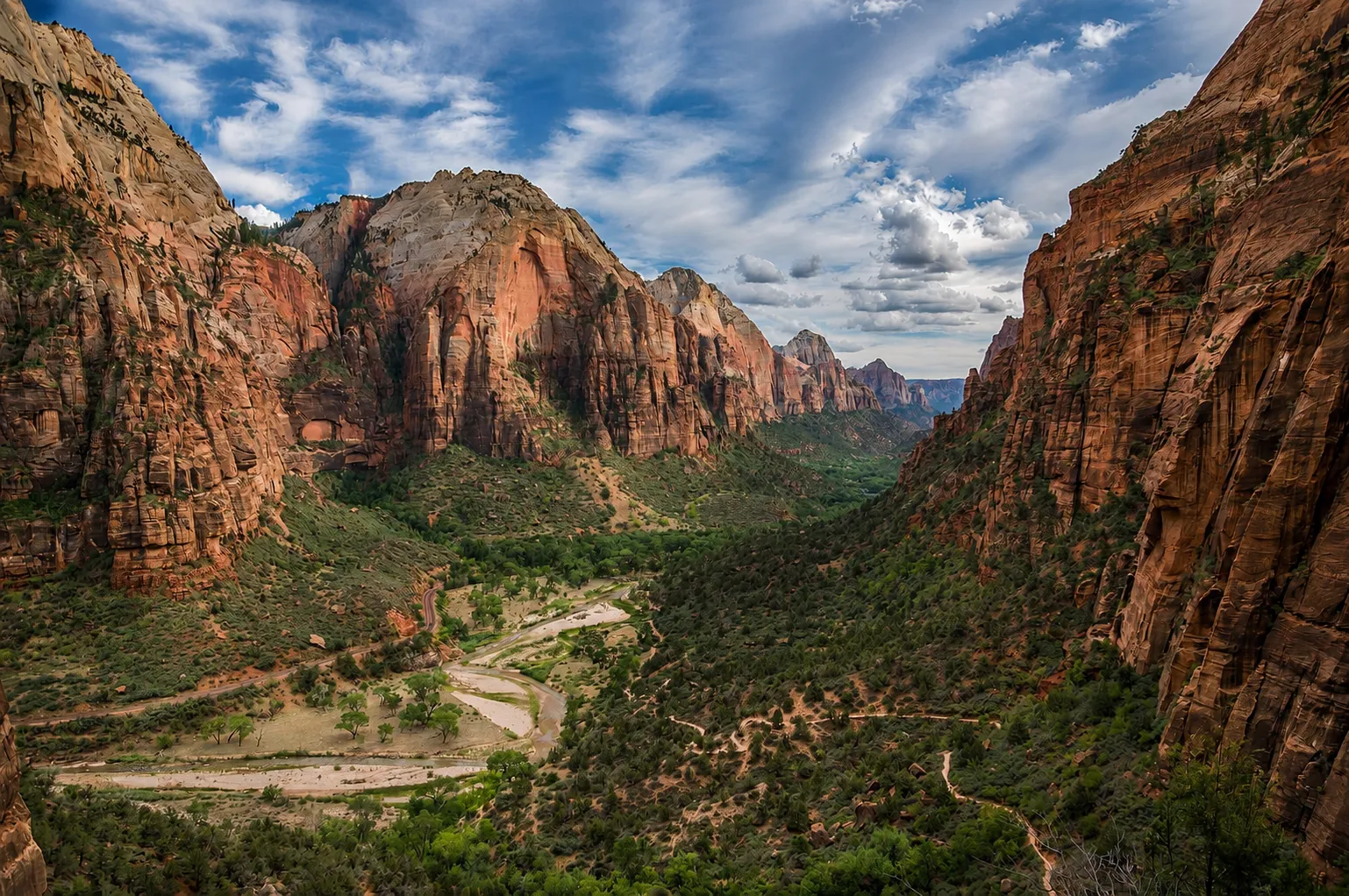
Table of Contents
Most national parks make you work to find the dramatic part. You hike five miles, you climb 2,000 feet, you earn the view. Zion drops you off in the middle of it. The shuttle stop at Big Bend puts you 50 feet from the Virgin River with 2,000-foot sandstone walls on both sides — no hike required. That accessibility is also Zion's problem: 4.5 million people figured out the same shortcut, and the park has spent the last decade trying to manage them.
2026: What Actually Changed at Zion
The $100 non-resident surcharge. Effective January 1, 2026, non-US residents aged 16 and older pay an additional $100 per person on top of the standard entrance fee — not per vehicle, per person. A family of four traveling on tourist visas pays $400 in surcharges plus the $35 vehicle fee. Children 15 and under are exempt. The workaround is the $250 America the Beautiful Non-Resident Annual Pass, which waives the surcharge for the holder plus all passengers in one private vehicle. If you're hitting two or more of the 11 designated parks (Zion, Bryce, Grand Canyon, Yellowstone, Yosemite, Acadia, Everglades, Glacier, Grand Teton, Rocky Mountain, Sequoia & Kings Canyon), the pass pays for itself.
The Zion-Mt. Carmel Highway vehicle restrictions. Beginning June 7, 2026, vehicles exceeding any of the following limits cannot drive the highway between Canyon Junction and the East Entrance — not just the tunnel, the entire stretch: over 7'10" wide, over 11'4" tall, over 35'9" long, or over 50,000 lbs. The existing $15 escort permit system is being eliminated. If you're driving a large RV, motorhome, or oversized rental, you can no longer cut through the park east-to-west via the tunnel — you'll need to take Sheep Bridge Road or the longer detour, adding approximately 40 minutes. Most RVs (8–8.5 feet wide) exceed the width limit. Measure your vehicle before you arrive.
Parking still fills early. Lots inside the park fill by 8–9am most days March through November. After 9am, the free Springdale town shuttle is the practical answer — it runs along Zion Park Blvd and drops you at the pedestrian park entrance. You'll cover more ground on a shuttle-based day than spending an hour hunting for a spot.
Weeping Rock Trail reopened. After being closed since a November 2023 rockfall, Weeping Rock Trail and Shuttle Stop 7 reopened September 5, 2025. It's a short, steep 0.4-mile round-trip with 98 feet of climb to a hanging-garden alcove — worth the stop. Note: Hidden Canyon, East Rim Trail, and Observation Point access from Weeping Rock all remain closed.
📋 Park hours, entrance fees, live alerts, campground bookings, and trail maps are all on the TrailVerse park page — this guide covers the strategy.
Why Zion Is Worth It
The Virgin River is actively carving Zion Canyon right now — it cut roughly 2,000 feet of vertical depth over millions of years and it's still going. That's a living geological process you're walking through, not a static landscape. Standing at the canyon floor with 2,000-foot Navajo Sandstone walls on either side, you're inside the result.
Zion sits at the junction of three distinct bioregions: the Colorado Plateau, the Mojave Desert, and the Great Basin. That collision of climates produces hanging gardens tucked into canyon walls, fed by seeping groundwater. You won't find that combination anywhere else in the Lower 48.
83% of the park is designated Wilderness. Most visitors only see the nine shuttle stops along Zion Canyon Scenic Drive — which means the rest of the park is largely empty. The Kolob Canyons section, a 45-minute drive from the main entrance via I-15 exit 40, regularly sees a fraction of main canyon traffic.
Kolob Arch at 287 feet is the second-longest natural arch in the United States. The Navajo Sandstone walls soaring above the canyon floor are 180 million years old and up to 2,000 feet thick — the highest sandstone cliffs on Earth. Most people who visit Zion never see either of these things, which means you easily can.
When to Go (And Why It Matters)
October is the best time to visit Zion. All trails are accessible, crowds drop sharply after Labor Day, and late October brings fall foliage to the cottonwoods along the Virgin River. Daylight is shorter, so start hikes early, but the trade-off is completely worth it.
Spring looks appealing on paper but comes with a catch. March is three times busier than February thanks to spring break, and The Narrows is frequently closed by snowmelt well into the season — in 2023 it was closed from April 8 through June 19. If The Narrows is on your list and you're visiting in spring, have a solid backup plan.
Summer means a full park. Temperatures regularly exceed 100°F in the canyon bottom, parking fills before 9am, and monsoon season (July through September) brings flash flood risk that can close The Narrows with clear skies overhead. If you go in summer, start hiking by 6am, carry more water than you think you need, and check conditions daily.
Winter is the most underrated season at Zion. Crowds drop to their annual low, and private vehicles are allowed to drive Zion Canyon Scenic Drive — the only season that's permitted. Cold temperatures and ice on higher trails require microspikes, but the canyon in winter light is spectacular.
Season | Dates | Temps | Crowd | Best For | Watch Out For |
|---|---|---|---|---|---|
Spring | Mar–May | 60–80°F; near-freeze nights | Moderate, spikes March | Wildflowers, Angels Landing | Narrows closures, slippery trails |
Summer | Jun–Sep | 90–105°F | Peak | Narrows (when open), swimming holes | Heat, flash floods, parking chaos |
Fall | Oct–Nov | 60–75°F | Low–Moderate | Everything — this is the best season | Shorter daylight |
Winter | Dec–Feb | 40–60°F days | Lowest | Solitude, photography, canyon drives | Ice on trails, some road closures |
The Trails Worth Knowing About
Angels Landing has recorded 19 confirmed deaths as of 2026, 17 of them from falls. The dangerous section isn't the steep switchbacks — it's the half-mile chains section from Scout Lookout to the summit, where you're scrambling on exposed sandstone with a 1,000-foot drop on both sides. Descending the chains is statistically harder than ascending; most falls happen on the way down. You need a permit from Recreation.gov for the chains section — available through a day-before lottery or a seasonal lottery months in advance. If you don't get a permit, Scout Lookout is a legitimate destination — the canyon views from there rival the summit, and no permit is required to reach it.
The Narrows bottom-up is the version most people do, and it doesn't require a permit. You walk from Temple of Sinawava upstream to Big Spring and back — about 10 miles round-trip, with a significant portion spent wading through the Virgin River. The risk is flash floods: a storm 20+ miles upcanyon can send a wall of water through with completely clear skies above you. Check the USGS Virgin River gauge before entering — the trail closes above 150 CFS and becomes dangerous between 70–150 CFS. Also worth noting: toxic cyanobacteria has been detected in the Virgin River. Don't drink the water untreated.
Canyon Overlook Trail is the most underrated trail in the park. It's a 1-mile round-trip with minimal elevation gain, starting at the east side of the Mt. Carmel Tunnel, and it gives you sweeping views of the Zion Canyon entrance and Pine Creek Canyon. You'll rarely find it crowded, even during peak season. If you've done the shuttle-stop highlights and want one more trail before dark, this is it.
Kolob Arch via La Verkin Creek is a full-day commitment — 14 miles round-trip through the Kolob Canyons section, entered from I-15 exit 40. This is where you'll find Kolob Arch and hike through riparian zones and creek crossings in a landscape that looks nothing like the main canyon. Almost no visitors from the main park make the drive over here, which means you'll have one of the most spectacular sections of the park largely to yourself.
What Most People Get Wrong
The Springdale town shuttle solves the parking problem entirely, but most first-timers don't know it exists. Park anywhere along Zion Park Blvd in Springdale, catch the free shuttle to the pedestrian park entrance, and skip the in-park parking situation completely. You'll spend zero time circling lots and more time on trail.
Most guides treat Angels Landing as binary: summit or nothing. Scout Lookout is a real destination — you hike the same steep switchbacks, get real canyon views, and don't need a permit to stop there. If the chains section looks worse than expected when you arrive, turning around at Scout Lookout is a completely legitimate call, not a failure.
The Narrows bottom-up needs zero permit, but if you go in spring, build in flexibility. Some years it's been closed until late June due to snowmelt flows. Don't plan a Zion trip around a single trail without a backup — the park has plenty, and conditions change.
The Night Sky
Zion earned International Dark Sky Park certification from DarkSky International on June 3, 2021 — the last of Utah's Mighty Five parks to earn it. The main canyon rates Bortle Class 3 due to Springdale's light dome to the south, while Lava Point Overlook (7,890 ft) and Kolob Canyons sections reach Bortle 2 — above canyon haze with nearly unobstructed horizons and some of the darkest skies in the American Southwest.
🌌 The Zion Astrophotography Guide — Bortle class, Nikon Z6II settings, Milky Way calendar, and best shooting locations — publishes next week. Subscribe to get it in your inbox.
Getting There & Base Camp
Springdale, Utah (population ~500) sits immediately outside the south entrance and functions as Zion's gateway town. Las Vegas is 2.5 hours southwest, Salt Lake City is 4.5 hours north, and St. George is 45 minutes southwest — making Zion genuinely accessible from multiple directions. Most visitors fly into Las Vegas and drive up through the Mojave on I-15, then UT-9 through La Verkin into Springdale.
Cell service dies the moment you enter Zion Canyon. Download your permits, offline maps, and the day's weather forecast before you enter the south entrance — see gear section. The Kolob Canyons section has its own entrance off I-15 exit 40, with no gateway town nearby but almost no crowds either.
Gear for This Park
KEEN Newport H2 — the Virgin River bottom is cobbled rock and the current is real, especially in early summer. Regular hiking boots will waterlog in the first 100 yards and become dangerous on slippery wet stone. The Newport H2 drains fast, grips on wet rock, and the closed-toe protects against the sharp cobblestones — both essential in The Narrows.
Black Diamond Trail trekking poles — you'll use these for two completely different things at Zion: wading stability in The Narrows current, and controlled descent on the Angels Landing chains section. Both situations benefit from poles, even if you don't normally hike with them. Collapsible versions pack into a daypack when you hit dry trail.
CamelBak M.U.L.E. hydration pack — NPS recommends 1 gallon (4 liters) of water per person per day in summer, and you'll be on trail before water fountains or vendors open. The M.U.L.E.'s 3-liter reservoir plus the 9-liter cargo space covers a full morning of summer hiking — water, permit, phone, snacks, and a light layer without weighing you down.
Gaia GPS — cell service is unreliable inside Zion Canyon and completely absent in Kolob Canyons. Download the park before you arrive and use offline navigation. The free version handles this.
Kahtoola MICROspikes — Navajo sandstone becomes a skating rink when it freezes or ices over, and it does both in winter. These strap over trail shoes or boots in 30 seconds and give you real grip on icy switchbacks. Don't attempt the Angels Landing switchbacks or any high-elevation trail in winter without them.
Frequently Asked Questions
What's the best time to visit Zion National Park?
October is the sweet spot — crowds drop significantly after Labor Day, temperatures fall into the comfortable 60–75°F range, and every major trail is open. Fall foliage hits the cottonwoods along the Virgin River in late October, which adds a color layer you won't get any other time of year. If October doesn't work, early November and late September are close seconds.
How does Zion compare to Bryce Canyon?
They're close enough (about 90 minutes apart) to do both on the same trip, and they're genuinely different parks. Bryce sits at 8,000+ feet with hoodoo formations and wide-open plateau views — Zion is a deep sandstone slot canyon at lower elevation with a river running through it. Most people who've done both say Zion hits harder on first visit, but Bryce is more unique globally. Do both if you can.
Do you really need a permit for Angels Landing?
Yes — you need a permit from Recreation.gov to hike the chains section past Scout Lookout. The day-before lottery opens at 12pm Mountain Time the day before your planned hike; the seasonal lottery for peak season opens months in advance. Hiking to Scout Lookout requires no permit at all, so you can make the call on the morning of your hike.
How many days do you need at Zion?
Two full days covers the main canyon highlights — Angels Landing (or Scout Lookout), The Narrows, Canyon Overlook, and an evening in Springdale. Three days let you add a half-day in Kolob Canyons, which most people skip and almost no one regrets. If you're combining Zion with Bryce Canyon, budget at least five days total so you're not rushing either park.
🗺️ Planning your trip? TrailVerse's AI trip planner builds custom itineraries based on your dates, interests, and pace.
➡️ Considering Bryce Canyon too? Use the Compare National Parks tool to weigh fees, parking, and amenities side by side, then send your choice into the AI Trip Planner to build a 5–7 day Utah itinerary.
Keep reading
More on this topic from TrailVerse