Hike Gichi Onigaming (Grand Portage)
Grand Portage National Monument
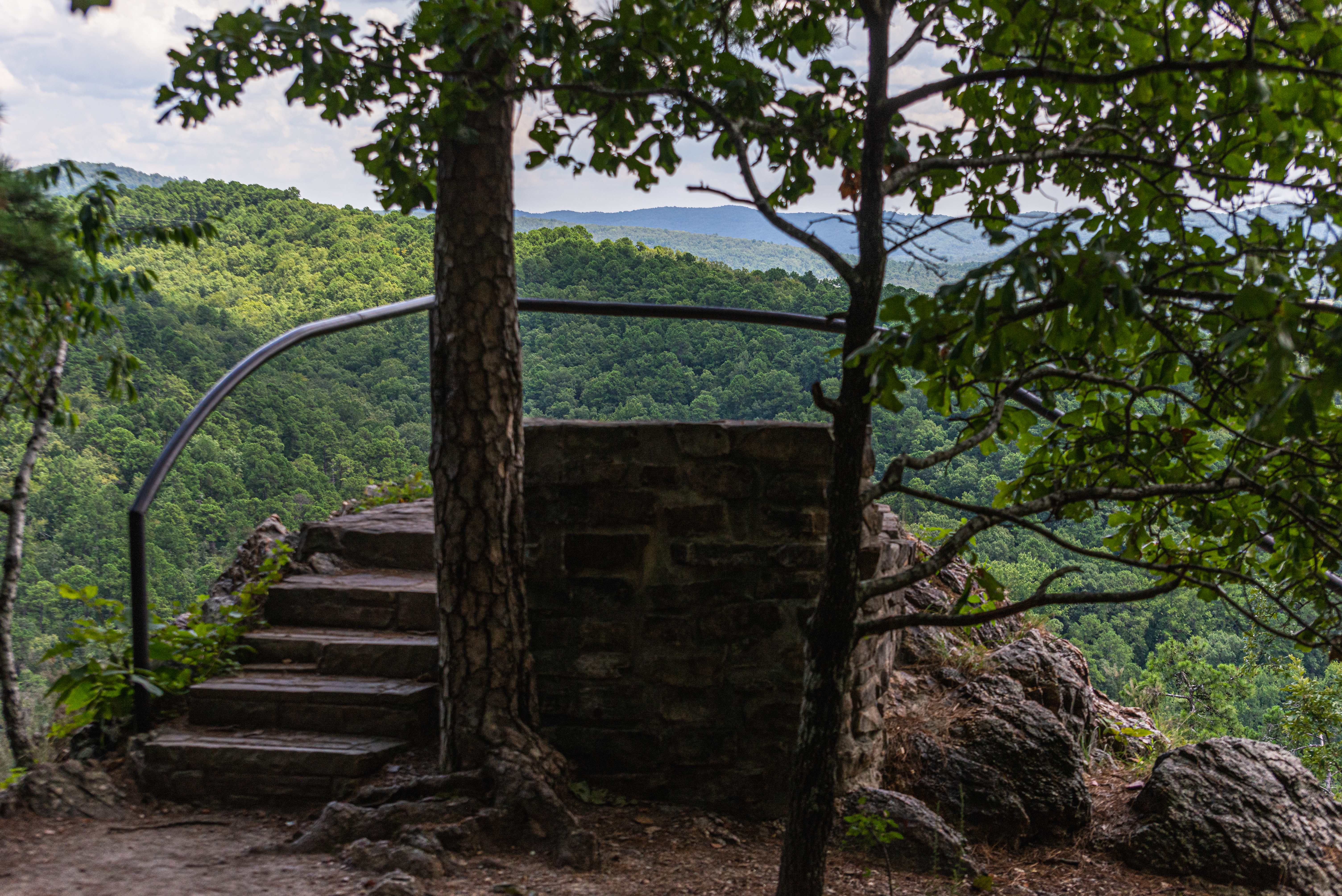
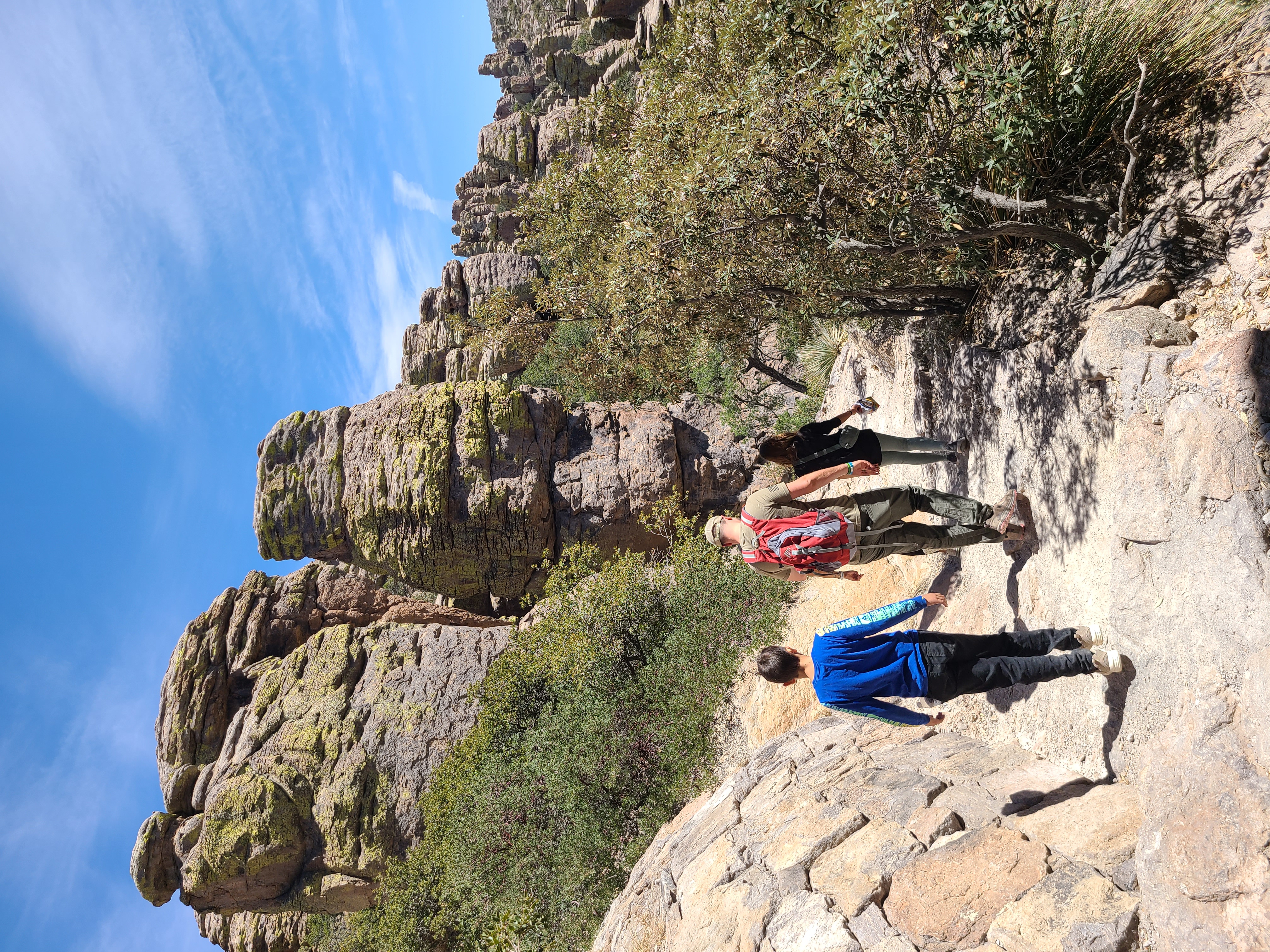
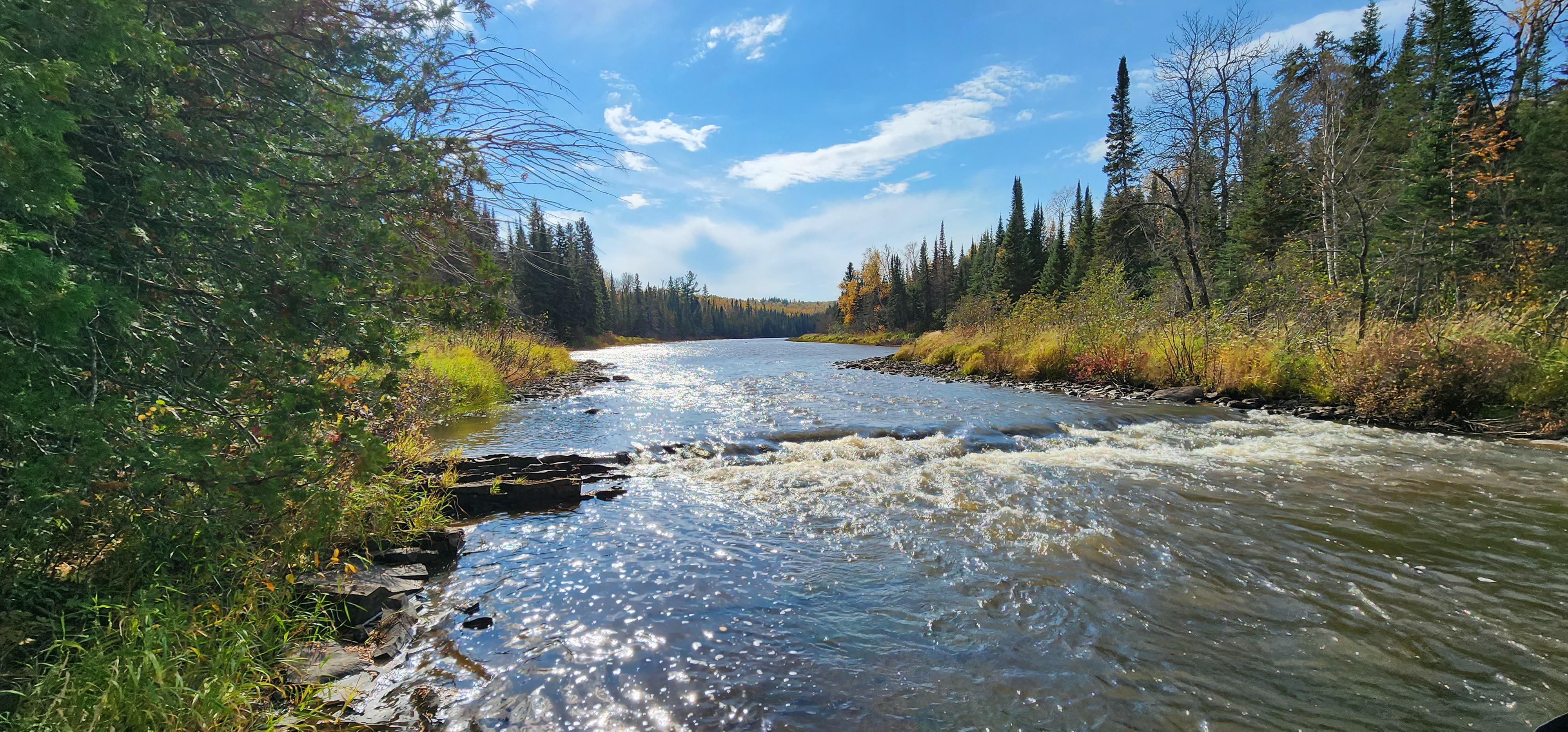
Walking Through Time Take a trip through history by hiking a trail that has been in use for thousands of years! Gichi Onigaming , the Great Carrying Place, was part of an extensive cross-continent trade network before European contact. Early French fur traders translated the name to Grand Portage ( portager = to carry). Whether you walk a short distance or the whole length, the Grand Portage is a wonderful way to experience the southern boreal forest and walk in the footsteps of the voyageurs . Two remote campsites are available to hikers and paddlers with a free backcountry permit . This is the only camping allowed on the trail. Bicycles are prohibited on the trails at Grand Portage National Monument. Fires are only permitted in designated fire rings at Fort Charlotte. Today's portage trail corridor can be thought of in two parts: the eastern "half" that passes through gaps and valleys to avoid the high rocky ridges, and the western "half" that passes over elevated terrain to avoid steep slopes and swamps. The parking area at Old Highway 61 approximately divides the halves so hikers can choose the exploration into history of their choice. Glimpse into the Fur Trade Era The Grand Portage corridor is a recent focus of archeological investigations. Using data collected by David Thompson, former Nor'wester and surveyor for the international boundary commission, archeologists traced the 1821 portage using GIS technology. Thompson's 1821 portage data, it turned out, compared closely with the present portage configuration. Cultural features investigated by archeological teams include the resting places ( poses in French) referred to in fur trade journals. Other features located along the portage such as watering holes called "the Fountain," "the Parting Trees," one that offered the last glimpse voyageurs had of Lake Superior and home while weighed down by their 180 pound burdens, and a place called "the Meadow" of "rich grass fields." From 1963-1976 a series of dives, sponsored by the Quetico-Superior Underwater Research Project, took place near historic Pigeon River canoe landings at Fort Charlotte. Divers found an assortment of artifacts including materials from birch canoes, cedar paddles, and footwear; items only preserved because of the anaerobic conditions in the river bottom sediments. These types of investigation offer glimpses into the culture and lifesty…