Arches 2026: No Timed Entry, Crowds & Visitor Guide
Arches has no timed entry in 2026. Crowd patterns, Delicate Arch timing, fees, and the seasonal surprises that catch first-time visitors.
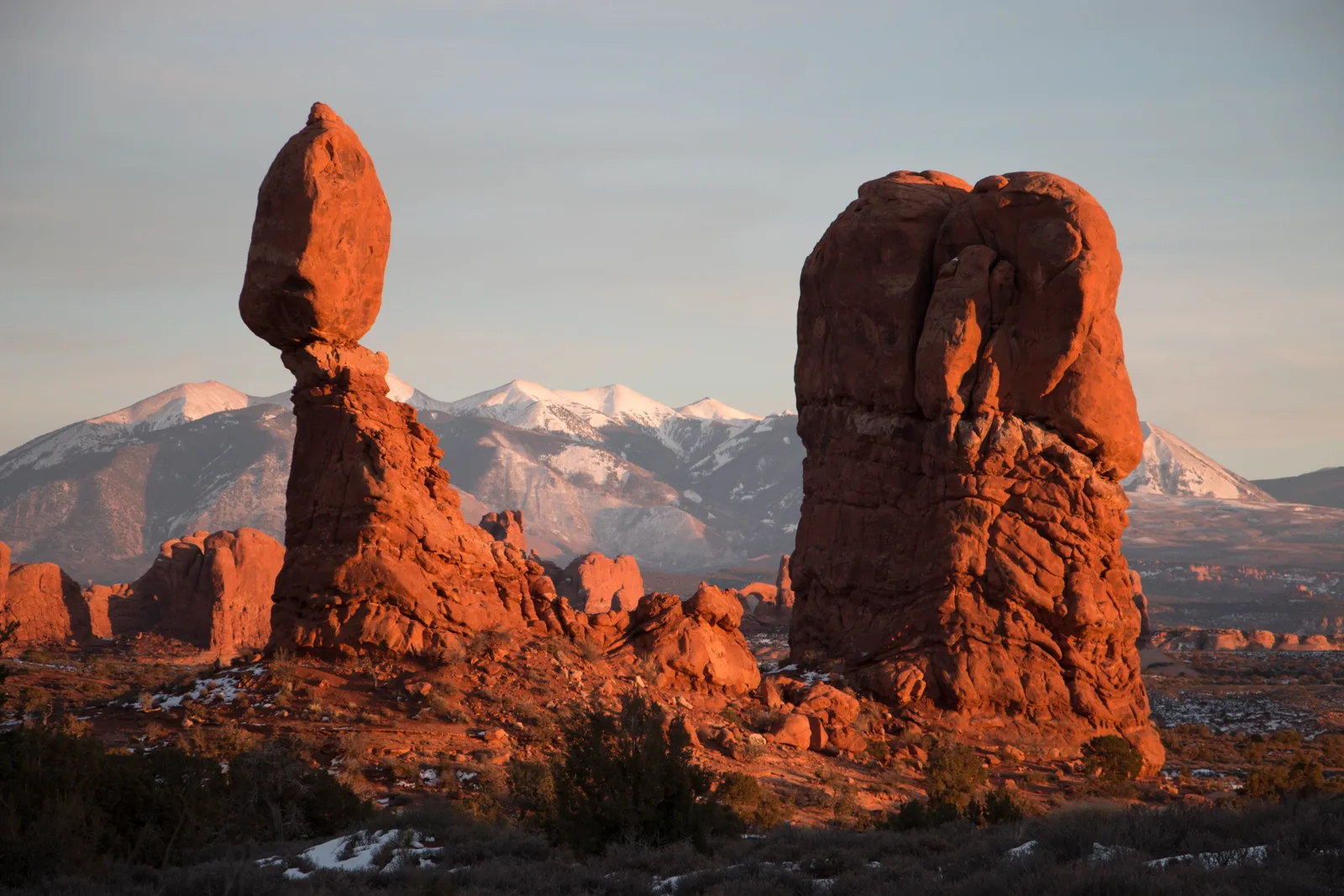
Table of Contents
If you've been searching for the latest on Arches National Park timed entry 2026, here's the answer: it's gone. The National Park Service officially eliminated the reservation system on February 18, 2026 — you no longer need a $2 advance ticket to enter the park. Most websites still say you do, which is why you're probably confused. This guide gives you the full picture: what changed, how to time your visit, which trails are worth it, and what catches people off guard every single season.
The 2026 Timed Entry Change — What It Means for You
On February 18, 2026, NPS announced that Arches will not use timed entry this year — no advance reservation, no $2 fee, no logging into Recreation.gov at midnight. You still need a valid entrance pass (America the Beautiful annual pass or a day pass), but that's it. If you're seeing websites that say otherwise, they haven't updated yet.
Two things still require advance reservations: Fiery Furnace guided ranger tours and self-guided Fiery Furnace permits (book at Recreation.gov, up to 7 days ahead — these sell out fast). Devils Garden Campground sites also still require booking. Everything else — every trailhead, every viewpoint, every sunrise — is walk-up as of 2026.
Here's what the change doesn't fix: parking. The Delicate Arch trailhead lot fills by 8–9 AM on spring and summer mornings. The Windows lot fills by 10 AM. A timed entry system won't help once the lot is full, and it won't now. The strategy is exactly what it's always been: arrive before 7 AM or after 4 PM.
When lots hit capacity, rangers can and will temporarily restrict access to specific areas. It's not a free-for-all — just no advance online system. Check the NPS entrance webcam before you leave Moab to see real-time conditions. Superintendent Lena Pace's official statement explicitly encourages after-hours visits — which is smart advice year-round, not just when lots are packed.
📋 Park hours, entrance fees, live alerts, campground bookings, and trail maps are all on the TrailVerse Arches park page. This guide covers the strategy.
🚀 Want a ready-made Arches itinerary? Use the AI National Park Trip Planner to generate a 1–3 day Arches plan based on your dates, fitness level, and interests, then drag-and-drop it into a visual itinerary.
Why Arches in April (And Why You Should Go Now)
If you're visiting in April 2026, you've picked well. Daytime temps run 60–75°F, the slickrock starts showing wildflowers in the cracks, and crowds are still manageable before the summer surge hits in earnest. It's the last genuinely comfortable month before things compound: June brings 90°F+, and the crowds that follow Memorial Day don't let up until September.
April is also the month the Milky Way season opens. The galactic core becomes visible in the pre-dawn hours — not peak positioning yet, but enough that you can start scouting compositions. If astrophotography is even a side interest, April is your test run before the core climbs high enough to frame over Delicate Arch in summer.
By May, visitation surges — 2025 data shows roughly 193,448 visitors in May, the single busiest month of the year. April sits at around 162,090 — the sweet spot where the weather is right and the crowds haven't peaked. Go now if you can.
When to Go (Full Year Breakdown)
Season | Months | Temps | Crowd | Best For |
|---|---|---|---|---|
Spring | Mar–May | 50–80°F | Medium, rising | Hiking, wildflowers, Milky Way opening |
Summer | Jun–Aug | 90–105°F | Peak | Dark skies, early morning hikes only |
Fall | Sep–Nov | 55–80°F | Medium | Best overall hiking, photography |
Winter | Dec–Feb | 25–55°F | Low | Solitude, snow on arches, no Milky Way core |
Spring (March–May) brings ideal hiking temps, wildflowers in the slickrock cracks, and the opening of Milky Way season. The catch: May is the park's single busiest month, and spring break weekends in late March can feel like summer. If you go in spring, aim for early April over late May.
Summer (June–August) is when Arches gets genuinely dangerous midday, not just uncomfortable. July averages a high of 97°F, and temperatures regularly hit 100°F+ on exposed trails like Delicate Arch — rangers conduct hundreds of heat-related search-and-rescue operations annually. Summer is peak Milky Way season, which is spectacular, but every major hike needs to finish before 10 AM.
Fall (September–October) is the most underrated season. Temps drop back to 60–80°F, the monsoon rains end by mid-September, and the crowds thin significantly compared to spring. September is arguably the single best month to visit — spring-like conditions, the Milky Way still visible by 9 PM, and dramatically better parking availability.
Winter (December–February) is the park's best-kept secret. January sees only about 28,000 visitors versus 195,000 in May — you'll have the trailheads almost to yourself. Snow-dusted red sandstone is one of the most stunning things in the American Southwest. Bring microspikes for icy slickrock and check road conditions before leaving Moab, but don't let winter scare you off.
The Trails Worth Your Time
Delicate Arch is the obvious one, and it's obvious for a reason. The 3-mile round-trip trail climbs 480 feet of exposed slickrock past Ute petroglyphs before depositing you in an open sandstone bowl where a 65-foot freestanding arch stands against sky and canyon. Go at sunrise or an hour before sunset — the warm light raking across the bowl makes the hike. Midday in summer is not just uncomfortable here; it kills people every year.
Landscape Arch draws most of the Devils Garden crowd, but most visitors make a critical mistake: they turn around there. Don't. The trail continues past Landscape Arch through increasingly rugged terrain to Double O Arch at 4.1 miles round-trip, and the crowd drops by 90% within half a mile of Landscape Arch. Double O is arguably the more impressive formation and sees a fraction of the foot traffic.
The Windows Section packs more bang per step than anywhere else in the park. North Window, South Window, Double Arch, and Turret Arch all sit within a short, easy walk of the same parking lot — and a primitive loop trail circles behind the windows for a crowd-free perspective. It's also one of the best stargazing spots in the park, far enough from Moab's light dome to show the full Milky Way on a moonless night.
Sand Dune Arch takes about ten minutes, and almost no one goes. The arch is tucked inside a narrow slot between fins, with deep, shaded sand below that stays cool even in July. It's perfect for families, first-timers, or anyone who wants to experience what makes this park genuinely otherworldly without a strenuous hike.
Fiery Furnace is in a category of its own. It requires either a ranger-guided tour or a self-guided permit (book both at Recreation.gov — self-guided permits sell out by 8:05 AM during peak season). There's no marked trail, just a sandstone fin maze that requires route-finding, chimney climbs, and real scrambling. It's worth every bit of the effort, and it's the one place in the park that feels completely wild.
What Arches Gets Wrong (Most Visitors Don't Know This)
The black, lumpy crust on the ground between rocks isn't dirt — it's cryptobiotic soil, a living community of cyanobacteria, fungi, and mosses that stabilizes the desert ecosystem. A single footstep can destroy crust that took 50 to 5,000+ years to recover. "Don't bust the crust" isn't a cute park sign — it's why designated paths exist, and why walking on bare slickrock instead of stepping off-trail matters everywhere in this park.
The parking reality catches people every season. No timed entry doesn't mean no crowds — the Delicate Arch lot fills by 8–9 AM from April through October, and the Windows lot is gone by 10 AM most spring and summer days. If you arrive after 9 AM at either trailhead in peak season, have a backup plan. Park at the visitor center if needed, or pivot to a less-trafficked trail like Sand Dune Arch or Balanced Rock.
Devils Garden beyond Landscape Arch is where the park's best-kept secret lives. Most visitors treat Landscape Arch as the endpoint because it's labeled as such in most guides. Push past it, and you're in genuinely wild terrain — Double O Arch and the Primitive Trail loop to Private Arch are some of the finest hiking in the American Southwest, and after Landscape Arch the trail to Double O is yours almost entirely. This is where Arches stops being a popular overlook and starts being a real park.
The Night Sky
Arches is a certified International Dark Sky Park with Bortle Class 2 skies — one of the darkest certified sites in the contiguous United States, where the Milky Way casts faint shadows on the landscape during moonless nights. April marks the opening of the galactic core season, with the core visible in the pre-dawn hours and the peak Milky Way season arriving in May. Plan any night sky visit around new moon dates: April 17, May 16, and June 14 are the next three windows with maximum darkness.
🌌 Arches is a certified International Dark Sky Park with Bortle Class 2 skies. For the full astrophotography guide — Nikon Z6II settings, Milky Way calendar, and where to set up — read the Arches Astrophotography Guide.
Gear for Arches
Osprey Talon 22 Pack — the Delicate Arch trail is 3 miles of exposed slickrock with no shade and nowhere to put a heavy bag. The Talon 22 sits close to your back and doesn't catch wind on the exposed section near the bowl. Bring it half-full — you're moving fast, not camping.
Nalgene Wide Mouth 32 oz — there's no water at any trailhead in Arches. Plan on 2 liters minimum for Delicate Arch in spring, 3 liters if you're hiking in June–August. Bring two bottles or a hydration reservoir. This is the most common reason rangers intervene.
Patagonia Capilene Cool Sun Hoody — sunscreen sweats off. A UPF 40+ hoodie doesn't. On the Delicate Arch trail between 10 AM and 4 PM, you're getting beach-level UV exposure on a reflective sandstone surface. A sun hoodie is lighter than reapplying sunscreen every 90 minutes.
Gaia GPS — cell service disappears inside Devils Garden and is nonexistent for self-guided Fiery Furnace. Download the trail maps offline before you leave Moab. AllTrails works too, but Gaia's topo layer is more useful when you're navigating unmarked terrain.
America the Beautiful Pass — $80, covers every NPS site for a year. Arches alone costs $35 per vehicle — add Canyonlands the next day, and the pass pays for itself.
Frequently Asked Questions
Does Arches National Park have timed entry in 2026?
No. Timed entry ended in February 2026 — you only need a regular entrance pass to enter. Fiery Furnace tours and Devils Garden Campground still require advance booking through Recreation.gov.
Should I visit Arches or Canyonlands?
Arches is more accessible — iconic landmarks on short, well-marked trails. Canyonlands is wilder, less crowded, and rewards a real hiking commitment. One day? Arches. Two days? Do both — they're 30 minutes apart, and both have Bortle 2 dark skies.
➡️ To compare them side by side on fees, parking, and amenities, use the Compare National Parks tool with Arches and Canyonlands selected, then send your choice into the AI Trip Planner to build a 2–4 day Moab itinerary.
What is the best time to visit Arches?
April–May and September–October are the sweet spots — 50–80°F, manageable crowds, good light. Summer works if every hike finishes before 10 AM and after 5 PM. Midday on exposed trails in July isn't uncomfortable; it's dangerous.
How long do you need?
One full day covers Delicate Arch, the Windows Section, Balanced Rock, and Landscape Arch. Two days adds Fiery Furnace, the full Devils Garden loop, and a night sky session. Combine with Canyonlands and plan 3–4 days in the Moab area.
Keep reading
More on this topic from TrailVerse